Domestic vs Foreign ICs: Chinese Alternative Chips to TI, STM, and Infineon
Compare Chinese alternative to TI STM chip solutions for industrial automation, power management, and IoT. Technical specs, pricing, supply chain, and selection guide.
Domestic vs Foreign ICs: Chinese Alternative Chips to TI, STM, and Infineon
The global semiconductor landscape has undergone a fundamental shift over the past decade, with Chinese integrated circuit manufacturers emerging as credible alternatives to established Western brands. For procurement engineers, product managers, and supply chain directors working in industrial automation, power electronics, and IoT device manufacturing, understanding the capabilities and limitations of Chinese alternative to TI STM chip solutions has become essential for strategic sourcing decisions. The traditional dependency on Texas Instruments, STMicroelectronics, and Infineon for critical IC components now faces scrutiny from multiple directions: geopolitical trade tensions, extended lead times, price volatility, and the maturation of domestic Chinese semiconductor fabs. This comprehensive guide examines the technical specifications, application compatibility, supply chain resilience, and total cost of ownership comparisons between imported and domestically manufactured ICs, providing engineering teams with actionable intelligence for component selection in 2024 and beyond.
Why the Chinese Alternative to TI STM Chip Market Is Growing Rapidly
The Chinese alternative to TI STM chip ecosystem has expanded from a niche market of low-cost knockoffs to a sophisticated industrial base capable of producing components that match or exceed foreign equivalents in specific applications. Several converging factors drive this acceleration: Chinese government subsidies exceeding $150 billion under the "Big Fund" semiconductor initiative have modernized fabrication facilities, while domestic demand from electric vehicle manufacturers, smart grid operators, and industrial robot producers has created guaranteed volume for local suppliers. The COVID-19 pandemic exposed the fragility of just-in-time supply chains dependent on overseas production, prompting companies to dual-source critical components. Geopolitical export controls on advanced semiconductor technology have paradoxically accelerated Chinese development of mature node chips (28nm and above), where most industrial applications actually operate. For engineers evaluating components, the question is no longer whether Chinese alternatives exist but whether they deliver equivalent performance, reliability, and support for specific use cases.
The market for Chinese alternative to TI STM chip products spans multiple categories relevant to industrial customers: operational amplifiers and analog signal conditioning ICs, motor driver and power management controllers, microcontrollers for embedded applications, and interface ICs for industrial communication protocols. Manufacturers such as 3PEAK, Chipsea, and Blooming Microelectronics have achieved significant market penetration in analog front-ends, while companies like GigaDevice and C-Sky have established strong positions in 32-bit microcontrollers. The ecosystem extends to module-level suppliers who bundle Chinese ICs with firmware, drivers, and technical support, reducing adoption risk for engineering teams unfamiliar with component-level evaluation.
Technical Architecture Comparison: Chinese Alternative to TI STM Chip Pinout and Functional Equivalents
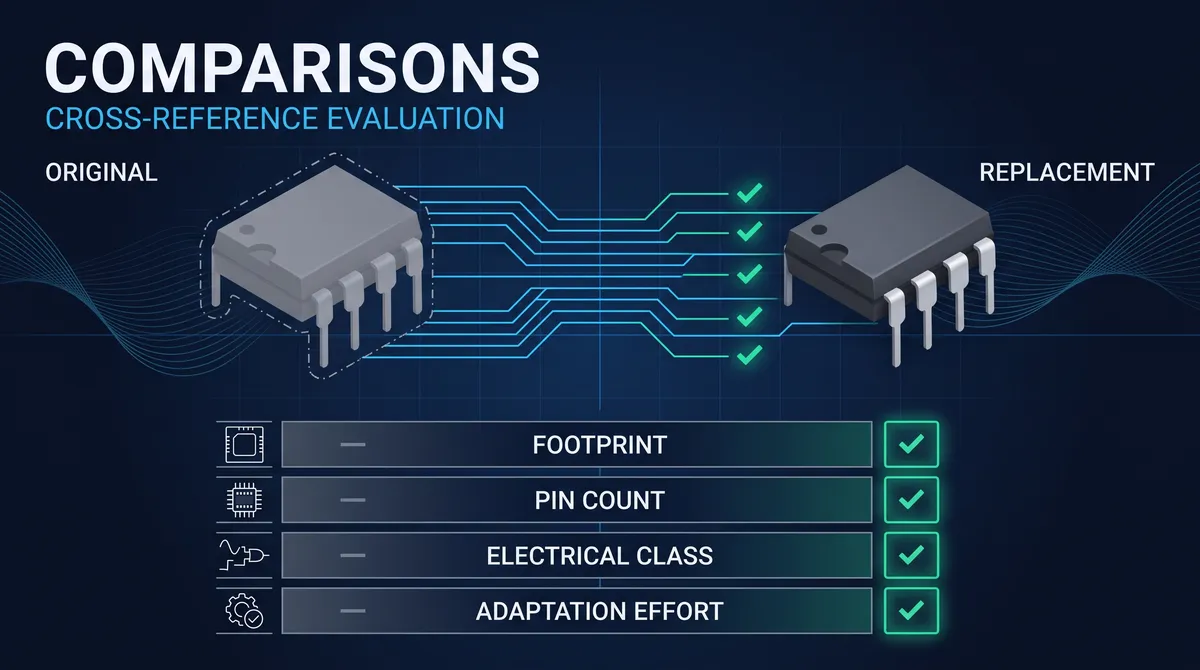
Understanding pin compatibility represents the first practical concern when evaluating Chinese alternative to TI STM chip solutions for existing designs. Most Chinese manufacturers deliberately design pinouts matching established TI, STM, and Infineon packages to facilitate drop-in replacement without PCB redesign. The SOIC-8, TSSOP-14, and QFN-32 packages common in industrial applications show excellent mechanical compatibility between imported and domestic sources. However, electrical characteristics require careful verification before production deployment.
Chinese alternative to TI STM chip products from manufacturers like YB Microelectronics and Fortsense demonstrate comparable input offset voltages (typically within ±1mV of branded equivalents), bandwidth product specifications within 10% of TI OPA-series counterparts, and input bias currents sufficient for high-impedance sensor interfaces. The critical differences emerge in temperature coefficients, where some Chinese alternatives specify wider operating ranges but with less rigorous characterization across the full temperature span. For industrial applications requiring -40°C to +85°C or extended -40°C to +125°C operation, additional screening and characterization testing becomes advisable when using alternative suppliers.
Power management ICs present a more nuanced comparison picture. Chinese alternatives to Infineon MOSFET drivers and TI power modules generally achieve 90-95% efficiency ratings comparable to imported products in typical load conditions, but may exhibit greater efficiency droop at extreme temperature boundaries or under pulsed loading scenarios common in motor control applications. Engineers should request characterization data across the full expected load and temperature envelope rather than relying on datasheet typical values.
Application-Specific Performance: Chinese Alternative to TI STM Chip for Industrial Automation
Industrial automation applications impose specific demands on IC components that may favor either imported or Chinese alternatives depending on system requirements. Programmable logic controllers (PLCs), variable frequency drives, and industrial sensors each present distinct evaluation criteria for Chinese alternative to TI STM chip components.
For PLC analog input modules processing 4-20mA current loops and 0-10V voltage signals, the signal chain from sensor interface to ADC requires low-noise operational amplifiers and precision voltage references. Chinese alternatives from manufacturers like 3PEAK (TPA series) and XAD (XA series) offer input noise densities below 10nV/√Hz, matching TI OPAx188 performance specifications while delivering 30-50% cost reduction at equivalent volumes. The critical qualification factor involves long-term drift specifications: some Chinese alternatives specify 25μV/√kHr initial drift but lack the accelerated lifetime testing data that TI provides for industrial temperature grade products. Engineering teams have successfully qualified Chinese amplifiers in PLC applications by implementing system-level calibration routines that compensate for drift characteristics.
Motor control applications present different challenges. The high-frequency PWM switching, current sensing, and protection circuitry in variable frequency drives requires gate drivers and current sense amplifiers that tolerate dv/dt stresses exceeding 50kV/μs. Chinese alternatives to STM L6491 and TI DRV8xxx gate driver families demonstrate adequate performance in the 5-20kHz switching frequency range common in industrial drives, but may show increased electromagnetic emissions at frequencies above 15kHz due to less sophisticated silicon process characterization. System designers should budget for additional EMI filtering when migrating to Chinese alternatives in high-performance drives.
Pin Compatibility Analysis: Chinese Alternative to TI STM Chip Package and Footprint
Mechanical and electrical pin compatibility facilitates the initial qualification of Chinese alternative to TI STM chip components, but thorough verification remains essential before production implementation. The most common packages in industrial applications include SOIC-8/16, TSSOP-20/28, QFN-24/32/48, and TQFP-32/44/64, all of which Chinese manufacturers produce with dimensional specifications meeting IPC standards.
Pin-to-pin functional equivalents exist for many popular TI, STM, and Infineon part numbers through cross-reference databases maintained by distributors and independent reference sites. A Chinese alternative to TI STM chip search typically reveals multiple domestic sources for standard analog functions (op-amps, comparators, instrumentation amplifiers), while more specialized functions like isolated gate drivers or high-precision sigma-delta ADCs may have fewer equivalent options. The completeness of the Chinese alternative ecosystem varies by function: general-purpose op-amps have excellent coverage, while precision measurement front-ends remain an area where imported brands maintain clearer advantages.
Engineers should verify not only pinout and package dimensions but also thermal characteristics when evaluating Chinese alternative to TI STM chip options. The junction-to-ambient thermal resistance (θJA) specifications may differ between manufacturers even when packages match, affecting the maximum sustainable power dissipation and derating curves. Chinese datasheets sometimes specify thermal resistance for reference boards only, requiring engineers to estimate thermal performance in actual application conditions.
Supply Chain Resilience: Procurement Advantages of Chinese Alternative to TI STM Chip Sources
The strategic value of Chinese alternative to TI STM chip sources extends beyond unit cost to encompass supply chain resilience considerations increasingly important in modern industrial planning. Geopolitical tensions, natural disasters, and pandemic-related disruptions have demonstrated that concentrated supply chains create unacceptable business continuity risks for critical industrial applications.
Chinese domestic suppliers offer several supply chain advantages: shorter lead times for domestic delivery (typically 2-4 weeks versus 12-26 weeks for imported components during shortage periods), reduced exposure to export control restrictions that could suddenly block access to advanced foreign chips, and currency stabilization benefits when procurement occurs in RMB rather than USD or EUR. For companies with manufacturing operations in China, local sourcing also simplifies logistics, reduces inventory carrying costs, and enables just-in-time delivery arrangements with domestic distributors.
The distributor ecosystem for Chinese alternative to TI STM chip products has matured significantly. Major global distributors including Digi-Key, Mouser, and Arrow now stock select Chinese manufacturer lines, while regional specialists like Shenzhen Goodix-licensed distributors and Shanghai-based IC brokers provide broader access to the domestic ecosystem. Quality assurance capabilities vary significantly among distributors, so engineering teams should verify that distributors implement proper handling, storage temperature limits, and counterfeit detection for Chinese-sourced components.
Volume pricing for Chinese alternative to TI STM chip products typically demonstrates 20-40% cost reduction compared to branded equivalents at quantities exceeding 1,000 units, with wider margins available for orders above 10,000 units. However, the total cost of ownership calculation must account for potential qualification expenses, inventory diversification costs, and any additional testing or burn-in requirements for applications with high reliability demands.
Certification and Compliance: Chinese Alternative to TI STM Chip for Regulated Industries
Industrial applications in automotive, medical, and safety-critical infrastructure require IC components that meet specific certification standards. Evaluating Chinese alternative to TI STM chip options for these regulated markets involves understanding both the technical capabilities of domestic manufacturers and the documentation they can provide to support customer certification processes.
Automotive-qualified Chinese alternatives to TI STM chip products have emerged primarily in the commodity analog and power management categories, with AEC-Q100 grade 2 qualification (operating temperature -40°C to +105°C) increasingly available from established manufacturers. However, automotive grade 0 qualification (-40°C to +150°C) and higher reliability grades remain dominated by traditional suppliers due to their extensive qualification data libraries and process control documentation. Engineering teams designing automotive applications should carefully assess whether Chinese alternatives meet the specific qualification grade required for their thermal environment.
Industrial safety standards including IEC 61508 SIL-2/3 and ISO 26262 ASIL-B/C present similar qualification challenges. Chinese manufacturers generally can provide the raw component characterization data needed to support system-level safety analyses, but the comprehensive failure mode effects and diagnostic analysis (FMEDA) libraries that TI and Infineon maintain require significant investment to replicate. For safety-critical industrial equipment, the qualification effort may outweigh cost savings from Chinese alternative sourcing.
Electromagnetic compatibility certification requires attention when evaluating Chinese alternative to TI STM chip components. Emissions and immunity characteristics may differ between manufacturers even when electrical specifications appear equivalent. Pre-compliance testing of systems using Chinese alternatives before submitting for regulatory certification helps identify potential issues early in the development cycle.
Cost-Benefit Analysis: Total Cost of Ownership for Chinese Alternative to TI STM Chip Selection
The unit price advantage of Chinese alternative to TI STM chip products represents only the starting point for total cost of ownership analysis. Comprehensive evaluation must account for direct costs (component price, shipping, duties), indirect costs (qualification engineering, inventory management, supplier relationship management), and risk costs (supply disruption, quality escapes, customer returns).
For high-volume consumer and industrial products where component cost dominates the cost structure, Chinese alternatives to TI STM chip products can deliver 25-50% bill of materials reduction. A product using $10 worth of branded ICs might see BOM savings of $2.50-5.00 per unit at scale, translating to millions of dollars annually for products shipping in 100,000+ unit volumes. These savings easily justify the engineering investment required for component qualification.
Medium-volume industrial products (1,000-10,000 units annually) present a more complex calculation. Qualification engineering costs of $20,000-50,000 may be amortized over product lifetime, but if volumes are lower or product lifetimes shorter, the per-unit benefit may not justify the upfront investment. Engineering teams should calculate the breakeven volume where qualification costs equal per-unit savings multiplied by volume.
Low-volume and long-lifecycle products (industrial infrastructure, defense electronics) benefit least from Chinese alternative to TI STM chip cost advantages. The engineering and documentation effort to requalify components, combined with extended product support requirements, may make continued use of established suppliers more economical despite higher component costs. These applications also face less price pressure and may prioritize supplier stability over component cost optimization.
Integration and Firmware Considerations for Chinese Alternative to TI STM Chip Migration
Migrating from branded ICs to Chinese alternatives requires engineering attention beyond simple pin-compatible replacement. Firmware compatibility, register maps, timing characteristics, and peripheral behavior all require verification to ensure system-level functionality remains intact.
Microcontroller migrations present the most complex integration challenges. While Chinese alternatives to STM32 and TI MSP430 products often maintain software compatibility through compatible development ecosystems (GCC-based toolchains, Eclipse-based IDEs), subtle differences in flash memory timing, power management behavior, and peripheral timing can cause firmware failures not apparent during initial testing. Engineers should implement comprehensive regression testing covering all code paths, particularly error handling and power management sequences.
Analog IC migrations typically involve more straightforward register-level compatibility for configurable devices. Programmable gain amplifiers, digital potentiometers, and configurable comparators usually maintain compatible register maps with branded equivalents, allowing firmware porting with minimal changes. However, timing-critical applications using ADC conversion triggers or DAC update rates may require characterization testing to verify that Chinese alternatives meet timing specifications at system clock frequencies.
Driver software and operating system support represents an additional consideration for Linux-based or RTOS-based systems using Chinese alternative to TI STM chip components. Hardware abstraction layers, device tree entries, and kernel drivers may require modification to recognize alternative vendor IDs and correctly configure peripherals. The open-source community has begun adding support for select Chinese manufacturers, but comprehensive driver coverage remains a work in progress.
Market Outlook: Chinese Alternative to TI STM Chip Technology Trajectory
The technological trajectory of Chinese alternative to TI STM chip products suggests continued capability expansion over the coming decade, with implications for engineering teams making long-term component decisions. Investment in semiconductor manufacturing infrastructure continues at pace, with new 28nm and 14nm fabs coming online that will enable production of more sophisticated IC functions domestically.
Process technology advancement will progressively narrow the performance gap between Chinese alternatives and imported products in many categories. Analog circuits particularly benefit from mature process nodes where Chinese fabs have achieved competitive quality levels. Digital and mixed-signal ICs will see gradual improvement as domestic process technology matures and yields improve through learning curve accumulation.
Product portfolio breadth is expanding as Chinese manufacturers move beyond simple commodity parts into more sophisticated application-specific integrated circuits (ASICs). Motor control ICs with integrated gate drivers and current sensing, multi-channel data acquisition ICs with integrated ADCs and signal conditioning, and communication interface ICs supporting industrial Ethernet protocols increasingly appear in Chinese manufacturer catalogs. This trend suggests that Chinese alternatives will become viable for a growing range of applications beyond basic analog building blocks.
Engineering teams should monitor Chinese alternative to TI STM chip market development through industry conferences, distributor communications, and technical publications to stay current with emerging options relevant to their product roadmaps. The semiconductor landscape evolves rapidly, and components that lack viable Chinese alternatives today may have competitive domestic options within 2-3 years.
Supplier Qualification Framework for Chinese Alternative to TI STM Chip Evaluation
Systematic supplier qualification ensures that Chinese alternative to TI STM chip sources meet the quality, reliability, and support requirements appropriate for target applications. A structured evaluation framework addresses technical capabilities, quality systems, commercial terms, and strategic alignment.
Technical qualification encompasses datasheet review, sample evaluation, and application testing. Datasheet review should verify that specifications meet design requirements with appropriate margin, identify any gaps in characterization data, and confirm package compatibility. Sample evaluation includes incoming inspection to verify electrical characteristics, thermal testing to confirm datasheet claims, and extended reliability testing for critical applications. Application testing in representative system environments validates functional compatibility under real operating conditions.
Quality system assessment examines supplier certifications (ISO 9001, IATF 16949 for automotive, AS9100 for aerospace), process control documentation, incoming inspection capabilities, and traceability systems. Chinese manufacturers with export-oriented businesses typically maintain quality systems compatible with international standards, but verification through questionnaires, audits, and third-party assessments remains advisable for critical applications.
Commercial qualification addresses pricing structure, minimum order quantities, lead times, payment terms, and warranty provisions. Engineering teams should negotiate non-disclosure agreements protecting proprietary application information before sharing detailed technical requirements. Long-term supply agreements become increasingly important as order volumes grow and system designs become dependent on specific alternative sources.
Conclusion: Strategic Decision Framework for Chinese Alternative to TI STM Chip Adoption
The decision to adopt Chinese alternative to TI STM chip products involves balancing cost advantages, supply chain benefits, technical suitability, and qualification effort across the product lifecycle. No single answer applies universally; engineering teams must evaluate specific application requirements, volume projections, and strategic priorities when developing sourcing strategies.
High-volume products with cost-sensitive designs, tolerance for qualification investment, and manufacturing locations in China represent the strongest candidates for Chinese alternative adoption. The cost savings per unit multiply significantly at scale, and domestic supply chains offer operational advantages for regional manufacturing operations. Technical risks can be managed through comprehensive qualification testing and conservative design margins.
Products with long support lifecycles, stringent reliability requirements, or low volumes may benefit more from dual-sourcing strategies that maintain relationships with established suppliers while exploring Chinese alternatives for future product generations. This approach preserves access to current supply while building competence for future transitions.
Engineering teams should begin Chinese alternative evaluation by identifying the highest-cost and most supply-risk IC categories in their products, then prioritize qualification efforts on components where domestic alternatives offer the greatest potential benefit. A phased approach reduces risk while building organizational competence in qualifying and supporting Chinese alternative sources. The semiconductor market will continue evolving, and engineering teams prepared to evaluate and adopt appropriate Chinese alternatives will be best positioned to navigate ongoing supply chain uncertainties while maintaining competitive product economics.
Not sure which sensor fits your project?
Talk to our mmWave application engineers for a free consultation.
Specify your hotel project with our engineers
Send your room count, ceiling type, and protocol preference. We will return a sample plan and quote within 24 business hours.
- Move from general guidance into a product or application discussion.
- Use RFQ when pricing, drawings, MOQ, or launch timing needs structure.
- Keep a direct contact path visible for fast clarifications and handoff.