End-of-Life Electronic Components: A Sourcing Guide
End-of-life electronic components sourcing guide: lifecycle stages, EOL notices and last-time-buy, and proactive obsolescence management for the supply chain.
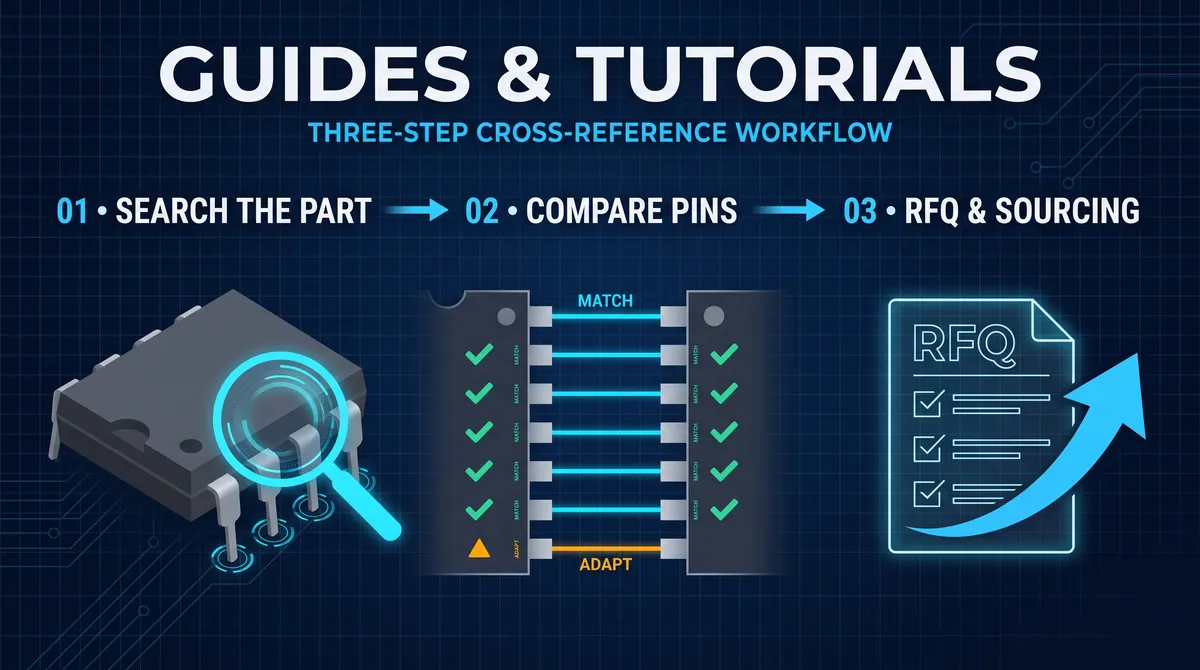
End-of-life electronic components sourcing is the activity that keeps a product shipping after the parts it was designed around have been retired by their manufacturers, and it is a discipline every long-lived product needs because the semiconductor industry retires parts on its own schedule. An end-of-life component, called EOL, is a part that the original manufacturer has formally discontinued, with a notice that states the last order date and the last shipment date, and the sourcing challenge is that the part's supply is finite and falling while the product's demand continues. The professional response is not a scramble when the notice arrives but a management discipline that watches the lifecycle, plans the last-time-buy, qualifies the replacement, and sources the remaining stock from the qualified channel. This guide explains what end-of-life means, how parts move through their lifecycle to EOL, how the notices and the last-time-buy window work, and how to build an end-of-life sourcing program across the BOM, so that the scariest event in component management becomes a scheduled, documented activity.
The stakes of end-of-life sourcing are the stakes of the product itself, because a part that goes EOL on a long-lived design can stop a production line, strand an installed base, and consume engineering time that a redesign budget never anticipated. The buyers and engineers who handle EOL well all run the same sequence: they watch the lifecycle early, they act on the notice with a plan, they place the last-time-buy at the normal price, they qualify a replacement for the long term, and they source the remaining stock from suppliers who can prove the parts are authentic. This guide turns that sequence into a repeatable method, so that the phrase end of life electronic components sourcing names a scheduled supply activity rather than an emergency, and so that the next EOL notice arrives with the runway already built.
What End-of-Life Means for an Electronic Component
An end-of-life electronic component is a part that the original manufacturer has officially discontinued, and the term has a precise technical meaning that the sourcing practice is built around. The manufacturer issues an end-of-life notice that names the part, the reason for the discontinuance, the last order date, the last shipment date, and the recommended replacement where one exists, and after those dates the part is no longer available through the manufacturer or its authorized channel. The sourcing consequence is structural: the total remaining supply of the part is whatever inventory exists in the world, the residual stock at the distributors, the lifetime-buy surplus that buyers ordered before the cutoff, and the legacy inventory that specialists hold, and every unit of that finite pool is a unit that will not be replaced. The buyer's job is to map that pool, to decide how much the product needs, and to secure the volume from the qualified sources before the pool draws down. The term end-of-life is therefore not a description of the part's age, it is a description of the supply's end, and the sourcing activity exists to manage the supply's end rather than to fight it.
The end-of-life state also has a family of related terms that the sourcing practice uses, and separating them makes the notices readable. Product change notice, or PCN, describes any change a manufacturer makes that could affect a customer, and a PCN can be the first warning that a part is heading toward EOL. Not recommended for new design, or NRND, is a lifecycle status that tells designers not to use the part in anything new, even while it is still produced. Last-time-buy, or LTB, is the final order window opened by the EOL notice, during which customers can order the part at the normal schedule. Obsolete and discontinued describe the same end state, with discontinued the more common American term and obsolete the industry-standard term. A buyer who reads these terms reads the lifecycle, and the reading is the first step of the end-of-life sourcing method, because the plan starts at the first signal, the PCN or the NRND status, not at the final cutoff.
How end-of-life differs from a temporary shortage
The sourcing response to an end-of-life part is fundamentally different from the response to a shortage, and confusing the two is a costly mistake. A shortage is a temporary supply interruption, a capacity crunch, a logistics delay, or a market panic, in which the part still exists and production will resume, so the buyer responds with reallocation, buffer stock, and patience. An end-of-life part is a permanent supply end, in which the part will never be produced again, so the buyer responds with a last-time-buy, a replacement qualification, and a legacy sourcing plan. The signals differ too: a shortage shows as long lead times and price spikes across the channel while the part stays listed, and an end-of-life shows as a formal notice with dates while the listings disappear. The correct response is the difference between waiting out a shortage and planning an end-of-life, and the professional buyer reads the signal before choosing the response. A part that is scarce because it is ending must be bought and qualified, while a part that is scarce because the market is panicking must be ridden out, and the wrong reading costs either dead inventory or a halted line.
The Component Lifecycle: How Parts Move to End-of-Life
The component lifecycle is the model that predicts end-of-life, and understanding it turns a surprise notice into an expected event. Every part moves through stages, introduction, growth, maturity, decline, and end-of-life, and semiconductor manufacturers publish lifecycle status for their products that names the stage. A part in introduction and growth is safe to design in, with full factory support and capacity. A part in maturity is the workhorse, produced at scale with the factory's attention, and the ideal time to standardize a design around it. A part in decline is under watch, with capacity being moved to newer products and the first signs of scarcity and price movement, and it is the stage at which the sourcing plan should begin. A part at end-of-life has reached the cutoff, with the notices issued and the pool finite. The buyer who reads the lifecycle stage of every critical part on the BOM knows which parts are safe, which parts are under watch, and which parts are ending, and that reading is the foundation of proactive end-of-life sourcing.
The lifecycle also explains why end-of-life events cluster: a manufacturer that moves a product line to a new process, a new package, or a new factory often retires a whole family of parts at once, because the older process or package becomes uneconomical to maintain. The clustering means the sourcing plan should watch the family, not just the part, because a PCN on one member of a family often precedes the EOL of the whole line. The clustering also means the buyer's qualification work compounds, because a replacement qualified for one member of a retiring family often serves the others, and the cross-reference and the test record transfer across the family. The lifecycle model is therefore not an academic frame, it is the calendar that the end-of-life sourcing program runs on, and the buyer who watches the stages and the families manages the end-of-life event with months of runway instead of a week of panic.
The lifecycle stages a buyer should watch on the BOM
The stages a buyer should watch on the BOM are the ones before the cutoff, and each stage has a checklist. Watch for the manufacturer's lifecycle status on the critical parts, the NRND and the limited-production statuses that precede the EOL notice, and watch for the availability signals, the number of distributors listing the part, the price movement, and the lead time, because the market's behavior often precedes the formal notice. Watch the PCNs on the part and its family, because a process, package, or test-site change can be the first step toward retirement. Watch the product's own demand, because the correct response to an EOL depends on how much of the part the product still needs and for how long. The buyer who watches these signals quarterly, rather than at stockout, catches the decline and acts during the runway, and the buyer who watches only the BOM's stock level catches the end-of-life at the cutoff, which is the difference between a plan and an emergency.
EOL Notices, Product Change Notices, and the Last-Time-Buy Window
The EOL notice is the formal event that opens the end-of-life sourcing activity, and reading it correctly sets the whole plan. The notice names the part, the reason for the discontinuance, the last order date, the last shipment date, and often the recommended replacement, and the window between the notice and the last order date is the last-time-buy window. The buyer's response to the notice is a set of calculations: the total remaining demand, the current forecast, the installed-base spares, and the service stock, summed into the volume the product needs, and the decision of how much to order at the normal price within the window. The last-time-buy calculation weighs the cost of holding the inventory against the risk of running out, and it leans toward the generous side because holding a few extra EOL parts is cheaper than halting a line. The buyer also reads the PCNs that precede the notice, because a PCN is the early warning that turns the notice from a surprise into a confirmation, and the buyer who tracked the PCNs has the replacement plan and the sourcing list already in place.
The last-time-buy is the point where the buyer converts the notice into the product's survival, and it deserves the same documentation as any major procurement decision. Record the notice, the dates, the reason, and the recommended replacement, in the BOM's change log. Record the demand calculation, the forecast, the spares, the service stock, and the safety buffer, and the buy quantity that follows. Record the sourcing plan, the volume from the authorized channel, the volume from the independent specialists, and the volume the brokers may supply, with the verification each source requires. And record the replacement track, the candidate, the qualification status, and the schedule, because the last-time-buy carries the product only until the replacement or the product's end. The record is the artifact that makes the EOL event managed, and it is the reason the buyer who documents the last-time-buy can hand the product's legacy to the next reviewer with the runway already built.
How to calculate a last-time-buy order for an EOL part
The last-time-buy quantity is a calculation between over-buying dead inventory and under-buying a halted line, and the method balances the two with the demand horizon and a safety buffer. Start with the product's remaining shipment forecast, by period, multiplied by the remaining life, add the installed-base and service demand, the spares, the repairs, and the warranty obligations, and add a safety stock percentage that reflects the confidence in the forecast and the cost of a halt. Then discount by the product's own obsolescence, a product near its own end does not need years of EOL parts, and by the storage and capital cost of the inventory, because the purchased parts sit on the balance sheet until they ship. The result is the quantity that covers the horizon with a buffer, and the buyer records the calculation with the order. When the forecast is uncertain, the buffer leans high, because one extra holding-year of EOL parts is small against one halted month, and the symmetric risk is the reason the generous side is the safe side.
How to Source End-of-Life Electronic Components
Sourcing an end-of-life part runs through the same market that handles obsolete parts, and the buyer's short list is the source of the supply. The first channel is the authorized distributor's residual stock, which covers the fresh discontinuance and carries the manufacturer's documentation, but which clears quickly. The second channel is the independent specialist in obsolete, discontinued, and end-of-life parts, which holds the legacy inventory and the lifetime-buy surplus and tests what it ships, and which is the backbone of the long-term supply. The third channel is the broker, which can find the rarest units but carries the least provenance and demands the fullest verification. The sourcing method is the same one this site's guides lay out for obsolete parts: qualify the source by history, verification capability, and documentation, verify the lot by visual, electrical, and physical inspection, and keep the evidence. The buyer who sources EOL parts well works the short list of qualified specialists first, because the relationship and the tested stock are what carry the product through the finite pool.
The sourcing plan also sets the volume against the pool's behavior. Buy the volume the horizon needs at the reasonable points, the last-time-buy at the normal price and the specialist's surplus stock at the legacy price, rather than buying piecemeal as the pool draws down, because each incremental buy pays a higher price for the same part. Hold the sourced volume against the replacement's progress, because a replacement that qualifies changes the sourcing math, and the buyer shifts from buying the EOL part to buying the transition. And verify every lot that arrives, because the finite pool is exactly the market where counterfeits and pulled parts concentrate, and a bad lot cannot be replaced by the next production run. The sourcing of an end-of-life part is the operation of the qualified channel over the finite pool, and the discipline of verification and volume is what makes the operation safe and sane.
Which suppliers hold end-of-life inventory
The suppliers who hold end-of-life inventory are the same short list across the industry, and the buyer's qualification of them is the difference between a plan and a gamble. The authorized distributors hold the residual stock of a fresh discontinuance, and they are qualified by the manufacturer relationship and the documentation they can produce. The independent specialists hold the legacy tail, the lifetime-buy surplus, the bought inventories of closing suppliers, and the parts they have stored and tested for decades, and they are qualified by their history, their facilities, their test capability, and their references. The brokers hold the fragmented units and the parts that only the gray market still has, and they are qualified only by the verification the buyer runs on the lot. The buyer's qualification weights the specialists highest for the long-term supply, the authorized channel for the fresh stock, and the brokers last with full inspection, and the qualification file records the evidence for each. The suppliers who hold end-of-life inventory are a known field to the buyer who has mapped it, and the mapping is the first deliverable of the end-of-life sourcing program.
Qualifying a Replacement for an End-of-Life Part
The end-of-life event is also the moment to qualify a replacement, because the last-time-buy is finite and the product's life may extend past the pool. The replacement decision runs the same three options as any component: source the original through the remaining channel, substitute a pin-compatible or equivalent part that preserves the board, or redesign around a current part when no source and no substitute can carry the horizon. The qualification of a pin-compatible replacement runs the three layers this site's guides describe, the package and pinout comparison, the electrical specification review across the operating range, and the behavior test including the firmware check for digital parts, and it produces the evidence that moves the replacement to the BOM. The qualification of a redesign runs the full engineering pipeline, schematic, layout, firmware, prototype, and validation, and it is the answer when the part is central, certified, or proprietary. The buyer runs the replacement track in parallel with the sourcing track, because the last-time-buy carries the product only until the replacement qualifies, and the parallel tracks are the difference between a transition and a cliff.
The replacement track also reads the manufacturer's own recommendation, because the EOL notice often names the recommended replacement and the migration notes explain the differences. A manufacturer that recommends a specific successor has done the hardest part of the qualification, and the buyer verifies the recommendation against the circuit rather than accepting it blindly, because the recommended part still has to fit the board and the firmware. The buyer also checks the replacement's own lifecycle, because a replacement that is itself in decline solves nothing, and a current, well-supported part with a clear roadmap is the only durable answer. The qualification record carries the manufacturer's recommendation, the buyer's verification, and the replacement's lifecycle, so the decision to replace is a documented one. The replacement track is the long-term half of the end-of-life response, and the qualification is its evidence base.
How to transition from an EOL part to a replacement
The transition from an EOL part to a replacement is a schedule, not a moment, and the buyer and the engineer plan it in stages. The first stage runs the legacy part, the last-time-buy stock and the sourced surplus, through the production while the replacement is qualified. The second stage qualifies the replacement, the samples, the datasheet comparison, the bench test, and the firmware bring-up, and the qualification record is the gate. The third stage pilots the replacement, a small production run on the new part with the full test and the field-watch, and the pilot is the confirmation. The fourth stage ramps the replacement into volume while the legacy stock is consumed as spares and the legacy build is retired. The transition plan sequences the four stages against the product's forecast, so the line never depends on the EOL pool after the replacement is ready and never wastes the legacy stock it paid for. The transition is the operational art of end-of-life management, and the documented schedule is what turns the EOL event into a transition rather than a cliff.
Certification and Compliance When Managing End-of-Life Parts
The end-of-life management of a certified or safety-critical part carries a compliance dimension that a commodity part does not, and the buyer reads it before the sourcing or the replacement. A part that carries an agency certification, a flammability rating, a functional safety approval, or a medical or aerospace qualification is certified per-part, and the sourcing of the original and the substitution of a replacement both have to preserve the certification. The original part sourced from the qualified channel carries the certification evidence, and the buyer confirms the certificate matches the lot. The replacement part must carry the same certification or the change must pass the same approval process, which can be the slowest part of the transition, and the buyer starts the certification work early rather than discovering it at the pilot. The compliance dimension also covers the environmental and material regulations, the RoHS and REACH status of the part, which can change across a legacy lot, and the documentation that proves it. The end-of-life sourcing of a certified part is therefore a qualification that reads both the part's electrical fitness and its regulatory standing, and the record carries both.
The compliance record is part of the end-of-life file, and it is the artifact that protects the product in an audit and a liability review. Record the certification of the original and the replacement, the certificates, the approval documents, and the change records, with the part's lifecycle dates. Record the RoHS and REACH status of every lot, with the evidence, because a legacy lot can predate the regulation or carry a deviation. Record the counterfeit verification, the inspection, the test, and the traceability, because a certified product depends on authentic parts. The compliance record is what lets a long-lived product keep its approvals through a component change, and it is the reason the end-of-life management of a safety-critical design is run with the same evidence discipline as the most ordinary buy. A buyer who manages the compliance dimension keeps the product certified through the transition, which is the entire value of managing EOL parts in a regulated industry.
Worked Example: Building an EOL Watch for a Product Line
Building an EOL watch for a product line is the worked example that shows the program in action, and a mid-size board that uses a microcontroller, a regulator, a logic chip, and a memory is the model. The watch starts with the BOM, each critical part listed with its manufacturer, its lifecycle status, and its availability signals, and the quarterly review walks the list against the manufacturers' notices and the distributor listings. The first review finds the regulator in decline, a PCN and a thinning distributor count, and the watch opens the file, marks the part at risk, and starts the replacement evaluation, while the still-healthy parts are left to the next review. The second review finds the memory under a formal EOL notice, and the watch escalates it, the last-time-buy calculation, the replacement search, and the sourcing plan all open in parallel. The worked example shows the watch as a quarterly discipline that catches the decline early and starts the work while the runway is long, and it is the model the program section formalizes. The example also reads the parts that the watch misses, because a part that changes subtly, a PCN that goes unnoticed, a price that creeps, is a part the watch's next review catches, and the catch is the value of the schedule.
The worked example also reads the data the watch needs, because the watch runs on the visibility of the signals. The manufacturer's lifecycle page, the distributor's listing changes, the price and the lead-time history, and the PCN notifications, are the inputs the quarterly review reads, and the buyer who feeds them builds the watch that catches the decline. The output of the watch is the at-risk list, the parts with a documented plan, and the plan, the last-time-buy quantity, the replacement status, and the sourcing owner, is what the next review updates. The worked example is the concrete face of the EOL watch, and it is the face that the program section turns into the standard procedure, which is the practical link between the watch and the management program.
How to Read a Manufacturer EOL Notice
Reading a manufacturer EOL notice is the skill the watch and the response both depend on, and the notice has a standard shape that every buyer reads the same way. The notice names the part or the family, the reason for the discontinuance, the last order date, the last shipment date, and often the recommended replacement, and the dates set the window the last-time-buy runs in. The notice also names the affected package and the temperature grades, because a family EOL can retire only the variants the notice lists, and the buyer confirms the exact device on the board is the affected one. The recommended replacement is the manufacturer's own first answer, and the buyer reads it as the starting point of the replacement search rather than as the final answer, because the recommended part still has to fit the board and the firmware. The notice is the formal event the watch was waiting for, and reading it correctly, the dates, the scope, and the recommendation, sets the whole response, which is the first skill of the EOL handling.
The notice also carries the compliance and the documentation the response needs, because the notice and the dates belong in the change record. The buyer files the notice with the part's file, records the dates in the BOM's change log, and uses the recommended replacement as the first cross-reference candidate, and the notice becomes the evidence the whole event is anchored on. The notice that is read once and filed is the notice that the next engineer inherits, and the filing is the discipline that turns the EOL event from a personal memory into a documented chapter. Reading the notice is the gate of the EOL response, and the response is the gate's execution, which is the practical structure the workflow runs.
The Role of the Distributor and the Manufacturer in EOL Sourcing
The distributor and the manufacturer play distinct roles in EOL sourcing, and the buyer works both channels. The manufacturer owns the lifecycle, the notices, the dates, and the recommended replacements, and it is the source of the last-time-buy, the final volume at the normal price, and the buyer's relationship with the manufacturer is the first line of the EOL planning, the sooner the notice is known the longer the runway. The authorized distributor owns the residual stock, the volume the manufacturer shipped before the cutoff, and the distributor's inventory is the first stock the buyer taps, and the distributor's relationship is the second line, the allocation of the residual volume and the documentation of the stock. The independent distributor owns the legacy tail, the surplus and the acquired lots that carry the product past the manufacturer and the authorized channel, and the independent's relationship is the third line, the long-term supply the EOL watch and the program build on. The three channels, the manufacturer, the authorized distributor, and the independent, are the EOL supply's layers, and the buyer works all three rather than any one alone, which is the structure the sourcing section described.
The roles also read the information flow, because the notice travels the same channels as the stock. The manufacturer's notice reaches the authorized distributors first, and the buyer who watches the distributor's listings and the PCN channels sees the notice's shadow before the formal email, which is the early warning the watch reads. The independent distributors track the EOL news as the market's signal, because their business is the legacy tail, and their cross-reference notes and their stock lists are the market's memory of the retiring part. The buyer who works the three channels gets the notice early, the stock first, and the replacement view, which is the working structure of the EOL sourcing, and it is the structure the program and the workflow both execute.
Building an End-of-Life Management Program Across the BOM
The end-of-life sourcing method reaches its full value as a program across the BOM, and the program has a standard shape that any organization can run. The program maintains the BOM with each part's lifecycle status, its manufacturer's published stage, its availability signals, and its watch date, so the at-risk parts are visible before the notices arrive. The program runs the quarterly lifecycle review, which checks the critical parts against the PCNs, the NRND status, the listing changes, and the price and lead-time movements, and which catches the decline early. The program maintains the cross-reference and the replacement pipeline, so each at-risk part has a documented candidate and a qualification status. The program keeps the supplier short list qualified, the independent specialists who hold the legacy stock, tested and trusted. And the program owns the records, the notices, the last-time-buys, the sourcing volumes, the verifications, and the transitions, so every EOL event is a documented chapter rather than a repeated emergency. A program with these five parts turns the end-of-life event from the supply chain's surprise into its calendar.
The program also carries the measurement that proves its value, because a management program that cannot show its effect is a ceremony. Measure the runway, the average time between the first lifecycle signal and the stockout, which the program should lengthen quarter by quarter. Measure the stockout events, the halted lines and the emergency buys, which the program should drive to zero. Measure the EOL cost per part, the last-time-buy, the sourced volume, the replacement qualification, and the redesign, which the program should reduce as the cross-reference library grows. And measure the coverage, the share of critical parts with a documented replacement or a planned last-time-buy, which should approach one hundred percent. The measurements are the program's defense and its direction, and a program that measures its runway, its events, and its cost is a program that the leadership supports and the engineers trust. The end-of-life management program is the completion of the sourcing method, and the measurement is its proof.
A Workflow for End-of-Life Component Sourcing
The full method fits into a workflow that any buyer and engineer run in the same order. First, watch, run the quarterly lifecycle review and capture the PCN, the NRND status, or the availability signal on the critical parts. Second, read the notice, the EOL dates, the recommended replacement, and the demand the product still has. Third, decide, for each at-risk part, whether to source the original through the remaining channel, substitute a pin-compatible replacement, or redesign, on the evidence of remaining life, part scarcity, and board complexity. Fourth, buy, place the last-time-buy at the normal price for the horizon's volume with a safety buffer, and record the calculation. Fifth, source, qualify the supplier, verify the lot, and buy the volume the pool requires, keeping the evidence. Sixth, qualify the replacement in parallel, the samples, the comparison, the bench test, and the certification where it applies, and plan the transition stages. Seventh, record, the notices, the buys, the verifications, the transitions, and the compliance, in the BOM's change log and the part's file, and update the watch date. That sequence is the end-of-life sourcing method, and it is the same method whether the part is a recently discontinued regulator or a decades-old controller.
The workflow is the reason the phrase end of life electronic components sourcing does not have to mean an emergency. With the lifecycle watched, the notice is expected. With the decision made, the response is chosen. With the last-time-buy placed, the runway is bought. With the source qualified and the lot verified, the supply is secured. And with the replacement qualified, the future is planned. The entire value of the method is that an end-of-life part, the finite, permanent, scheduled end of a component's supply, is handled with the same evidence, schedule, and qualification discipline as the most ordinary buy, and that discipline is what keeps a long-lived product shipping through the retirement of every part it was built on. A buyer who runs this workflow manages end-of-life components as a program, with a runway, a buffer, and a transition, which is the entire point of end-of-life electronic components sourcing done well.
Not sure which sensor fits your project?
Talk to our mmWave application engineers for a free consultation.
Specify your hotel project with our engineers
Send your room count, ceiling type, and protocol preference. We will return a sample plan and quote within 24 business hours.
- Move from general guidance into a product or application discussion.
- Use RFQ when pricing, drawings, MOQ, or launch timing needs structure.
- Keep a direct contact path visible for fast clarifications and handoff.