LM317 Replacement Guide: Best Alternatives for Voltage Regulation in 2026
Discover the best LM317 replacement alternatives for voltage regulation in 2026. Compare top ICs, specs, and selection criteria.
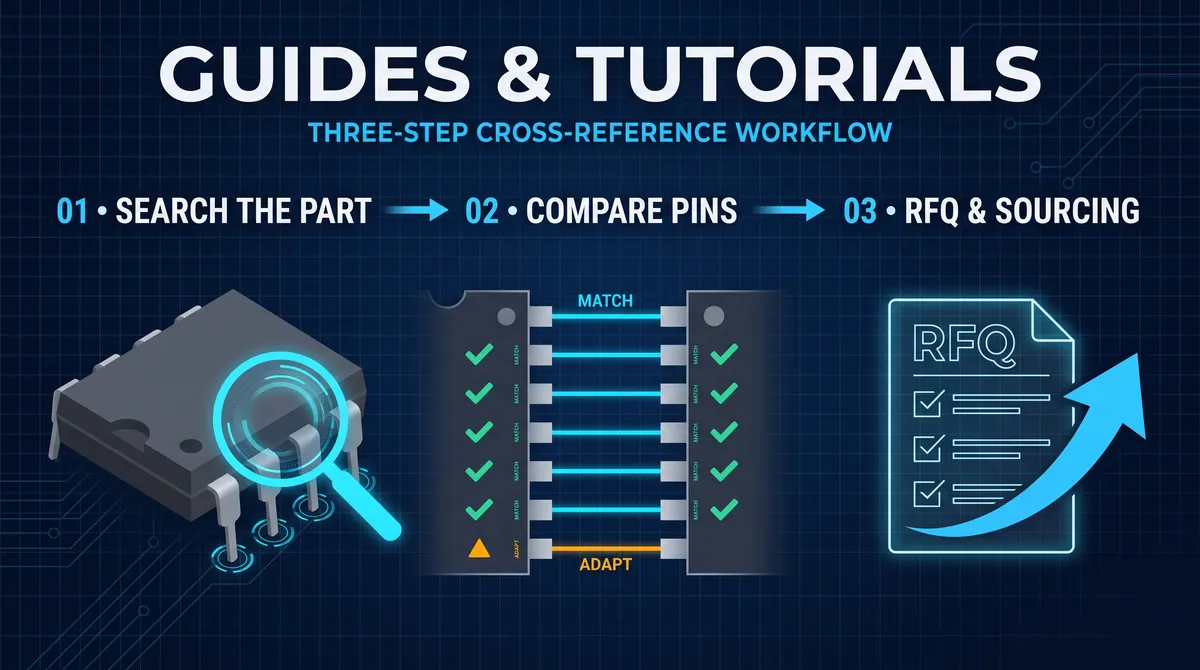
LM317 Replacement Guide: Best Alternatives for Voltage Regulation in 2026
The LM317 replacement alternative guide landscape has fundamentally shifted as of 2026, with dozens of modern low-dropout (LDO) regulators, switching regulators, and integrated power management ICs offering superior efficiency, thermal performance, and feature sets compared to the venerable but aging LM317 architecture. While the LM317 remains a workhorse in countless legacy designs, its high dropout voltage (typically 1.5-2.5V at full load), limited current options, and absence of shutdown controls make it increasingly unsuitable for battery-powered, space-constrained, and efficiency-critical applications. Engineers evaluating LM317 replacement alternatives must navigate a complex decision matrix encompassing dropout performance, quiescent current draw, thermal derating curves, output noise specifications, and total solution cost. This comprehensive LM317 replacement alternative guide examines the most viable substitutes across power ranges from 100mA to 10A, analyzes application-specific suitability, and provides actionable selection criteria for engineers transitioning legacy designs or specifying new power architectures in 2026.
Why Engineers Seek LM317 Replacement Alternatives in 2026
The LM317 replacement alternative guide discussion begins with understanding the architectural limitations that drive engineers toward modern alternatives. The LM317, introduced by Fairchild Semiconductor (now onsemi) in the early 1970s, operates as a linear voltage regulator requiring approximately 1.5-2.5V of headroom between input and output voltage to maintain regulation. This high dropout specification stems from its NPN pass transistor architecture, which inherently limits efficiency—particularly problematic when stepping down from commonly available 5V, 9V, or 12V supply rails to the 3.3V, 5V, or other intermediate voltages required by modern integrated circuits. In battery-powered applications, the LM317's typical quiescent current of 5-10mA represents significant self-discharge, reducing effective battery life in standby modes. Additionally, the LM317 lacks integrated features that have become standard in 2026: no soft-start capability, no enable/shutdown pins, no power-good indicators, and no built-in current limiting with foldback characteristics.
The engineering community's interest in LM317 replacement alternatives reflects three converging trends. First, the proliferation of low-voltage digital logic (1.8V, 1.2V, and even 0.8V cores in advanced processors) demands power supplies with minimal dropout to maximize efficiency when converting from a single Li-ion cell or USB power. Second, thermal constraints in compact enclosures make the LM317's linear regulation approach increasingly untenable—power dissipation of 2W or more in high-current applications requires substantial heat sinking that conflicts with miniaturization goals. Third, modern system-on-chip (SoC) designs incorporate sophisticated power management demands: multiple voltage domains, dynamic voltage scaling, and precise power sequencing that only programmable power management ICs or multi-rail switching regulators can accommodate. This LM317 replacement alternative guide addresses each of these pain points by presenting alternatives matched to specific application requirements.
Understanding Voltage Regulation Fundamentals Before Selecting Alternatives
A thorough LM317 replacement alternative guide must establish foundational concepts that distinguish between regulation architectures and their suitability for different load profiles. Linear voltage regulators, including the LM317 and its direct replacements, regulate output voltage by dissipating excess power as heat through a variable-resistance pass element. This approach offers simplicity (few external components), low output noise (critical for RF and precision analog circuits), and fast transient response but sacrifices efficiency proportional to the voltage difference between input and output. A 12V-to-5V linear regulator operating at 500mA dissipates 3.5W regardless of load characteristics, necessitating thermal management that adds cost, weight, and complexity.
Switching regulators—buck (step-down), boost (step-up), and buck-boost topologies—achieve efficiency typically ranging from 85-95% by storing energy in inductors or capacitors and transferring it to the load in controlled pulses. The trade-offs include higher output ripple (requiring additional filtering for noise-sensitive applications), electromagnetic interference (EMI) concerns, and increased component count. For applications where the LM317 serves as a simple 5V or 3.3V rail from a higher-voltage source, a synchronous buck converter using an integrated switching regulator IC often provides a drop-in replacement with superior efficiency and comparable or reduced external component count when using highly integrated solutions. Low-dropout (LDO) regulators represent a middle ground—linear regulators optimized for minimal input-output voltage differential, typically 100-300mV at rated current, using PMOS or PNP pass elements. LDOs preserve the noise advantages of linear regulation while reducing wasted power, though efficiency still depends on the input-output differential.
Top LM317 Replacement Alternatives for Low-Current Applications (Under 100mA)
The LM317 replacement alternative guide begins its technical analysis with low-current applications, where the LM317's 1.5A maximum rating represents significant overkill and its quiescent current becomes the dominant efficiency metric. For loads requiring up to 100mA, modern LDOs offer dramatic improvements in every performance dimension. The Microchip MCP1700/1702 family exemplifies this category: 250mA output capability with only 1.6-2μA quiescent current, dropout voltage of 178mV at full load, and integrated short-circuit and thermal protection. An LM317 drawing 5mA quiescent current represents 5-25× higher standby power than these modern alternatives—critical for battery-backed systems where the regulator remains active during storage or sleep modes.
The Texas Instruments TPS7A02 enters this category with even more impressive specifications: 0.5μA typical quiescent current, 200mV dropout at 200mA, and output noise of just 6.5μV RMS across the 10Hz-100kHz band. For analog and RF applications where the LM317's output noise of approximately 40-50μV RMS proves problematic, the TPS7A02 represents a transformative upgrade. The Analog Devices ADP171/ADP172 family offers similar performance with the added benefit of a wide input voltage range (up to 20V absolute maximum), enabling direct operation from automotive 12V rails or industrial 24V supplies without pre-regulation. These devices integrate all compensation circuitry internally, requiring only input and output capacitors—no external programming resistors as required by the LM317, reducing BoM complexity and board space.
When selecting among these LM317 replacement alternatives, engineers should consider the specific load profile. Intermittent loads with sleep modes benefit most from ultra-low quiescent current devices like the TPS7A02, while continuously loaded circuits may prioritize dropout voltage or thermal performance. Package options range from SC-70 (1.0×1.25mm) to SOT-223, with thermal resistance varying accordingly—the MCP1702 in SOT-23 package offers 150°C/W junction-to-ambient thermal resistance versus the LM317's typical 50°C/W in TO-220, though the LM317's absolute dissipation capability is proportionally higher. For drop-in compatibility, SOT-223 packages with adjusted pinouts require minimal board modification.
Medium-Current LM317 Replacement Alternatives (100mA to 500mA)
The 100mA to 500mA range represents the LM317's sweet spot—applications requiring more current than micro-power LDOs comfortably deliver but less than the full 1.5A capability that justifies the LM317's thermal overhead. In this segment, the LM317 replacement alternative guide encounters a broader range of options spanning ultra-low-noise LDOs, high-efficiency switching regulators, and highly integrated power management ICs. The Texas Instruments LP2950/LP2951 remains a popular direct replacement with improved specifications: 100mA output, 380mV dropout at full load, and shutdown capability on the LP2951 variant. These devices accept input voltages up to 30V and include reverse-battery and output short-circuit protection, making them suitable for automotive and industrial environments.
For applications demanding both low noise and high efficiency, the Analog Devices ADM717x family stands out with 500mA output capability, 45mV dropout at 500mA, output noise of 5μV RMS, and 35μA quiescent current. The ADM7172 specifically offers a fast transient response of 20V/μs, making it suitable for digital loads with rapidly changing current demands. This performance envelope directly addresses the LM317's weakness in driving digital logic with its limited bandwidth and slower response to load transients. The Microchip MIC2940/2941 provides a 1.25A option with programmable output voltage (1.24V to 26V reference) and an enable pin—features entirely absent in the standard LM317 but increasingly required in modern systems enabling selective power domains.
Switching regulator alternatives in this current range include the Texas Instruments TPS62130/62140 family, offering 500mA-750mA synchronous buck conversion at up to 96% efficiency. These devices integrate the inductor within the package (wafer-level chip-scale package), reducing external component count to just two capacitors. The 3V-17V input range covers single-cell Li-ion through 12V systems, while the I2C-programmable output voltage enables dynamic voltage adjustment for processor cores or FPGA banks. For applications where the LM317's fixed or manually-adjustable output proves limiting, programmable switching regulators offer a compelling path forward, though at higher cost and with greater EMI considerations.
High-Current LM317 Replacement Alternatives (500mA to 3A)
Applications requiring 500mA to 3A represent the most demanding segment for LM317 replacement alternatives, where thermal management becomes critical and efficiency gains from modern alternatives translate directly into reduced heat sink requirements and improved reliability. The classic LM317 in TO-220 package can theoretically deliver 1.5A with adequate heat sinking, but in compact assemblies without forced airflow, practical current capability often derates to 800mA-1A. Modern alternatives address these constraints through superior process technology, advanced thermal packaging, and integrated protection features. The STMicroelectronics L78L33 and L78S33 families provide 500mA and 2A capabilities respectively with fixed 3.3V output, requiring only input and output capacitors—no programming resistors needed, reducing BoM count and improving repeatability.
The ON Semiconductor NCP567 series enters this category with dropout voltages below 200mV at 3A, enabled by PMOS pass elements and proprietary process technology. This represents a 10× improvement in dropout compared to the LM317, meaning a 5V-to-3.3V converter operating at 2A dissipates only 340mW versus the LM317's 3.4W—reducing heat generation by a factor of ten. Package options include D2PAK and DPAK for surface-mount assembly with exposed pads providing thermal paths to the PCB, plus TO-220 for traditional through-hole mounting. The NCP567 includes thermal shutdown, current limiting, and safe-area compensation, addressing reliability concerns in industrial and automotive environments where the basic LM317 offers no such protections.
For switching alternatives in the 1A-3A range, the Texas Instruments TPS54560/54620 synchronous buck converters deliver up to 3A (or 4A for the TPS54620) at efficiencies exceeding 92% across most load conditions. These devices integrate the power MOSFETs, compensation, and control logic into a single package, requiring only an inductor, input capacitor, output capacitor, and feedback network. The 4.5V-60V input range accommodates automotive (12V and 24V systems), industrial (24V PLC systems), and communications equipment (48V telecom rails) applications directly. Integrated features include soft-start, frequency synchronization, power-good output, and cycle-by-cycle current limiting. Engineers migrating from LM317 designs will find these switching alternatives require more board area and careful EMI mitigation but deliver transformative efficiency improvements.
Switching Regulator Alternatives: When to Choose Buck Over Linear
This section of the LM317 replacement alternative guide addresses the fundamental architectural decision between linear and switching regulation approaches. Switching regulators offer efficiency advantages that scale with the voltage differential and load current—in high-ratio conversions (12V to 3.3V) at currents above 300mA, switching solutions consistently outperform linear alternatives. The typical efficiency curve for a linear regulator follows: Efficiency = Vout/Vin. A 12V-to-3.3V linear regulator operates at just 27.5% efficiency regardless of load, meaning 72.5% of input power dissipates as heat. A well-designed synchronous buck converter achieves 85-92% efficiency under the same conditions, reducing heat generation by 60-80% and extending battery life proportionally.
However, switching alternatives introduce considerations that may favor linear regulation in specific scenarios. Output noise remains the primary differentiator—switching regulators generate ripple at their operating frequency (typically 500kHz-2MHz for modern ICs) and harmonics that can interfere with sensitive analog circuits, RF front-ends, or precision sensors. The LM317's inherent low-pass filtering characteristics and absence of switching transients make it preferable for audio circuits, instrumentation amplifiers, or sensor excitation where microvolt-level noise matters. EMI represents another consideration: switching regulators generate conducted and radiated emissions that may exceed CISPR or FCC limits in unshielded equipment or require additional filtering components to pass compliance testing. For pre-compliance-constrained industrial equipment or consumer products destined for the European market, the LM317's silent operation offers meaningful advantages.
Integration level and BoM complexity also differ significantly. An LM317 voltage regulator requires the IC plus two capacitors and two resistors for adjustable operation—a total of four to six components depending on configuration. A synchronous buck regulator requires the IC, input/output capacitors, inductor, and typically a few passive components for feedback compensation and filtering, bringing the count to eight to twelve components. While modern integrated switching regulators reduce this burden, the complexity differential remains meaningful for cost-sensitive, space-constrained, or high-volume designs where even $0.05 per unit adds significant expense.
LDO Alternatives: Low-Dropout Performance at Linear Regulation Efficiencies
The LM317 replacement alternative guide must address low-dropout (LDO) regulators as a distinct category—linear regulators optimized for minimal input-output differential that preserve the noise and simplicity advantages of linear regulation while reducing thermal dissipation. The LM317's minimum dropout of 1.5-2.5V means that at 1A output, the device must dissipate 1.5-2.5W of heat just to maintain regulation margins, regardless of load requirements. Modern LDOs with dropout voltages of 100-300mV reduce this thermal overhead by 85-95%, enabling operation from batteries with minimal headroom or from supply rails with significant sag under load.
The Analog Devices LT1764/1765 family exemplifies high-performance LDOs in the 3A range, offering dropout voltages of 300mV at 3A, 20μV RMS output noise (10Hz-100kHz), and 1mA typical quiescent current. The LT1764 accepts inputs up to 20V and includes reverse-battery protection, making it suitable for automotive applications where load-dump transients reach 40V or more. The on-chip trimmed reference (1.22V ±2mV) provides excellent output accuracy of ±2% over temperature, while the devices integrate protection against reverse output polarity, current limiting, and thermal limiting. For applications where the LM317's typical ±4% output accuracy proves insufficient—such as precision analog supply or microcontroller VDD rails—these LDOs deliver meaningful improvement.
Texas Instruments' TPS74401 advances this category with a 3A output, 45mV dropout, and an output voltage range of 0.8V to 3.6V (or up to 5.5V with different variants). The device's programmable soft-start capability allows controlled power-up sequences, preventing inrush current issues that can trigger supply rail collapse in multi-rail systems. The enable pin with programmable delay enables power sequencing in complex digital systems without external microcontrollers or sequencer ICs. Quiescent current of 23mA under load (lower in shutdown) strikes a practical balance for portable and always-on applications. Engineers replacing LM317 designs with these LDOs will appreciate the compatibility in adjustable-output configurations—the TPS74401's external resistor divider programming mirrors the LM317 approach while adding the enable and soft-start features.
Application-Specific Replacement Recommendations
This LM317 replacement alternative guide provides specialized recommendations for common application domains where specific performance parameters dominate the selection criteria. For battery-powered portable equipment, the critical parameters are quiescent current, dropout voltage, and operating voltage range. The MCP1703A from Microchip supports input voltages up to 16V (accommodating 3-cell NiMH or single Li-ion with protection circuit), delivers 250mA, and draws only 1.6μA quiescent current—enabling shelf life measured in years rather than months. The LP3985 from Texas Instruments offers 300mA with 30mV dropout and 30μA quiescent current, suited for single-cell Li-ion applications where the 3.0V minimum input voltage accommodates the full battery discharge curve.
Audio and high-fidelity equipment power supplies demand low output noise and high power supply rejection ratio (PSRR). The LM317's PSRR of approximately 60dB at 120Hz—while adequate for many applications—falls short of the 80dB+ available from premium LDOs. The Analog Devices ADA4807-1/ADA4807-2 family (operational amplifiers with integrated LDO) offers PSRR exceeding 90dB at audio frequencies, while stand-alone LDOs like the LT3032 provide 86dB PSRR at 1kHz with 150mA output and 20μV RMS noise. For headphone amplifiers, phono preamps, or microphone preamplifiers where self-noise directly degrades signal-to-noise ratio, these low-noise LDOs represent meaningful improvements over any linear regulator using older technology.
Industrial control and automation applications prioritize wide temperature range, high input voltage tolerance, and robust protection features. The LM317's -40°C to +125°C operating range serves basic industrial needs, but modern alternatives extend to -55°C to +150°C for harsh environments. The STMicroelectronics L4984 and L4985 accept 36V inputs (suitable for 24V industrial rails with transients) and include output short-circuit, over-temperature, and input reverse-polarity protection. The Analog Devices ADM1177 adds output current measurement via an on-chip ADC, enabling predictive maintenance algorithms that monitor load current and detect impending failures before they cause system downtime—a feature entirely absent in the LM317 architecture.
Critical Parameters When Comparing LM317 Alternatives
This section of the LM317 replacement alternative guide details the specific parameters engineers must evaluate when selecting replacement components, providing context for interpreting datasheet specifications and understanding trade-offs between alternatives. Dropout voltage specifications appear in multiple forms across datasheets: typical dropout at rated current, maximum dropout including process and temperature variation, and dropout at reduced current. Engineers should use the maximum specification at the intended operating current and worst-case temperature, as designing to typical values risks dropout-induced loss of regulation under real-world conditions. The LM317's dropout of 1.5-2.5V (worst-case 3V) contrasts sharply with modern LDOs rated for 200-400mV maximum dropout at comparable currents.
Quiescent current—the current the regulator consumes to maintain its own operation—directly impacts efficiency at light loads or in standby modes. The LM317's 5-10mA quiescent current represents 50-100× the consumption of modern micro-power LDOs. For a battery-powered device spending 99% of its time in sleep mode, this difference can extend battery life from weeks to years. However, quiescent current is not always constant—some LDOs exhibit significant quiescent current increases at high output currents or when driving large capacitive loads. The datasheet quiescent current should be evaluated at the expected operating point, not just the minimum specified value. Additionally, some regulators exhibit IQ increases in dropout or near-dropout conditions, relevant for battery discharge applications where the supply voltage approaches the regulated output.
Thermal performance determines achievable output current in real-world enclosures without external heat sinking. The LM317 in TO-220 package can dissipate several watts with adequate heat sinking, but the same device in SOT-223 derates severely in typical PCB-mount configurations. Modern regulators specify thermal resistance from junction to ambient (θJA) and junction to case (θJC), enabling calculation of maximum dissipation at the expected ambient temperature. A regulator with 60°C/W θJA can dissipate only 1W when mounted in a 100°C ambient environment without exceeding the 150°C maximum junction temperature—insufficient for 500mA at 12V input. Package selection (exposed pad, thermal via arrays, integrated heat spreaders) significantly impacts thermal performance, and engineers should compare alternatives on an apples-to-apples basis using the same PCB mounting conditions.
Output voltage accuracy encompasses initial accuracy, line regulation, load regulation, and temperature stability. The LM317's ±4% initial accuracy and ±0.1%/V line regulation meet many requirements but fall short for digital loads requiring ±5% tolerance or precision analog circuits demanding tighter regulation. Modern bandgap references achieve ±1% initial accuracy with temperature coefficients below 50ppm/°C, translating to total variation under 2% across the full operating range. Load regulation—the change in output voltage as load current varies—depends on the regulator's open-loop gain and output impedance. Switching regulators typically specify load regulation of ±1% while LDOs achieve ±0.5% or better due to their direct regulation of output voltage versus the sampled and modulated approach of switching converters.
Pin-Compatible and Drop-In Replacement Options
This portion of the LM317 replacement alternative guide addresses the practical need for drop-in or pin-compatible replacements that minimize redesign effort when migrating existing LM317-based designs. True drop-in replacements maintain the same pinout (adjust, output, input) and package, allowing direct substitution without PCB modification. The LM317's adjust pin requires a resistor from output to adjust and another from adjust to ground to set the output voltage per the formula Vout = 1.25 × (1 + R2/R1). Pin-compatible alternatives that maintain this programming method simplify replacement but cannot offer significant feature additions requiring additional pins.
The STMicroelectronics LD1084 and LD1084V series provide pin-compatible replacements for the LM317 in TO-220 and D2PAK packages with improved specifications: 3A output current (2× the LM317), dropout of 1.2V maximum (25% improvement), and reduced quiescent current of 5-10mA (comparable to LM317 but with better line/load regulation). These devices suit applications where the LM317's 1.5A capability proves insufficient but the basic architecture remains appropriate—industrial controls, instrumentation power, or linear power supplies where the efficiency penalty of linear regulation is acceptable. However, these remain linear regulators with similar thermal limitations.
For applications requiring enhanced features without PCB modification, engineers can consider pin-strapping tricks or partial replacements. Many LM317 alternatives include an enable or shutdown pin that can be tied high (enabled) or left open (depending on internal pull-ups) if unused, allowing pin-compatible substitution in some cases. The Microchip MIC29302 offers this approach: the enable pin defaults to enabled if left unconnected, while the device provides 3A output, 450mV dropout, and a full suite of protection features. Engineers should verify this behavior in the datasheet and test prototype units under all conditions before committing to production.
| Parameter | LM317 (Typical) | LD1084 | MIC29302 | TPS7A91 |
|---|---|---|---|---|
| Output Current | 1.5A | 3A | 3A | 1A |
| Dropout (max) | 2.5V | 1.2V | 450mV | 200mV |
| Quiescent Current | 5mA | 10mA | 5mA | 950μA |
| Output Noise | 40μV RMS | 30μV RMS | 20μV RMS | 4μV RMS |
| Line Regulation | 0.01%/V | 0.05%/V | 0.002%/V | 0.001%/V |
| Package Options | TO-220, D2PAK, SOT-223 | TO-220, D2PAK | TO-220, D2PAK | SOT-223, 3×3 DFN |
| Drop-In Compatible | Yes | Yes | Yes | No |
Evaluating Switching Regulator Modules as Alternatives
Switching regulator modules—fully integrated solutions containing the regulator IC, inductor, and typically most passive components in a single package or module—represent a growing category within the LM317 replacement alternative guide. These modules address the complexity barrier that deters engineers from adopting discrete switching solutions, offering turnkey power conversion with minimal design effort. The Murata MYC0406 and similar μPOL (micro Point of Load) modules integrate a complete 6A synchronous buck converter in a 4.5×3.5×2.1mm package, requiring only input/output capacitors and minimal external components. Input voltage range of 2.7V-5.5V suits single-cell Li-ion or 3.3V intermediate bus applications, while output is programmable via I2C or external resistors.
The Texas Instruments TPSM82821/82822 series offers 2A-3A modules in 2.5×2.0×1.4mm packages with integrated inductors, requiring only six external components. These modules accept 2.4V-5.5V inputs and generate outputs from 0.4V to VIN × 0.6V, covering the common 3.3V, 2.5V, 1.8V, 1.2V, and 1.0V rails required by modern processors and FPGAs. Efficiency peaks at 95% and remains above 88% across most of the load range—a transformative improvement over any linear solution operating from 5V or 3.3V rails. The TPSM82822 adds an LDO mode for light-load efficiency improvement, automatically transitioning between switching and linear operation based on load conditions to optimize efficiency across the entire load profile.
Engineers considering module alternatives should evaluate not just performance specifications but also total solution cost, availability, and long-term support. While a discrete LM317 solution costs $0.15-$0.30 in volume, switching modules range from $2.00-$8.00 depending on current rating and features. For high-volume consumer products, this cost delta matters significantly; for industrial or medical equipment where board area and thermal management carry premium value, the module cost may represent overall system savings when accounting for reduced heat sink, simplified PCB layout, and faster design cycles. Vendor lock-in represents another consideration—modules from specialized power module suppliers may face end-of-life risks that module manufacturers mitigate through longer product lifecycles and formal change notifications.
Thermal Management Considerations When Replacing LM317
Thermal management emerges as a primary driver for LM317 replacement, making proper thermal design essential for successful implementation of alternatives. The LM317's high dropout voltage, while thermally inefficient, provides a built-in thermal margin—the device dissipates significant heat regardless of load, so additional dissipation from high load currents represents a smaller relative increase. Modern low-dropout alternatives present the opposite challenge: they operate so efficiently that thermal protection may never activate, leading engineers to underestimate thermal requirements. An LDO converting 12V to 5V at 500mA dissipates 3.5W—identical to the LM317 under the same conditions. The replacement's advantage lies in reduced dropout at lower currents, not reduced dissipation at high differentials and currents.
Proper thermal design begins with accurate power dissipation calculation. For linear regulators, dissipation equals (Vin - Vout) × Iout + Iq × Vin. At moderate to high loads, the first term dominates; at light loads, quiescent current contributes meaningfully. Switching regulator dissipation depends on efficiency: PD = Iout × Vout × (1/η - 1). A synchronous buck converter at 90% efficiency dissipates the same power as a 90% efficient linear regulator, but distribution differs—switching regulators dissipate power as heat in the IC, inductor, and diodes, while linear regulators dissipate primarily in the pass element. Proper thermal simulation should account for all heat sources and the PCB's thermal conductivity to the ambient environment.
Package selection dramatically impacts thermal performance. The LM317 in TO-220 package with 12°C/W junction-to-case thermal resistance can dissipate 8W to case at 100°C temperature rise. The same device in SOT-223 package exhibits 15°C/W junction-to-ambient in free air, limiting dissipation to approximately 1W without additional heat sinking. Modern LDOs in thermal-enhanced packages use exposed pads (ePAD) or bottom thermal pads to conduct heat through the PCB. The Texas Instruments TPS7A91 in 3×3mm VSON package specifies θJA of 58.3°C/W with the exposed pad soldered to a 4-layer PCB with appropriate thermal vias—roughly 2× better than SOT-223 packages. Engineers replacing LM317 designs should verify thermal performance with the actual PCB layout and expected ambient temperature, not just the datasheet specifications measured under standardized (and often unrealistic) conditions.
Common Mistakes When Replacing LM317 Designs
This section of the LM317 replacement alternative guide catalogs frequent errors engineers encounter when migrating from LM317-based designs to modern alternatives, enabling avoidance through awareness. The first and most common mistake involves neglecting input and output capacitor requirements. The LM317 requires a minimum of 0.1μF input capacitor and optionally 1μF output capacitor for stability—capacitors that many engineers include reflexively without deep understanding. Modern LDOs impose stricter requirements: some demand specific capacitor types (MLCC with appropriate voltage rating, minimum ESR range, or even specific dielectric materials like X5R or X7R), while others specify minimum and maximum capacitance values. Violating these requirements can cause oscillation, poor transient response, or accelerated capacitor failure. Engineers should read the capacitor selection sections of modern LDO datasheets thoroughly, not just the electrical specifications tables.
Ground plane and layout considerations differ significantly between the LM317 and modern switching alternatives. The LM317, as a linear regulator, tolerates moderate layout compromises—a few centimeters of trace length between input capacitor and regulator input causes negligible performance degradation. Switching regulators require careful attention to switching node placement (the node connecting the input capacitor, inductor, and switching FET), input and output loop areas, and feedback routing. A poorly laid switching regulator may exhibit excessive ripple, EMI failures, or instability that an LM317 would never exhibit. Engineers without RF or power electronics backgrounds may underestimate this complexity, leading to frustrating debug cycles.
The third common mistake involves assuming improved efficiency eliminates thermal concerns. While modern LDOs and switching regulators significantly outperform the LM317, they do not eliminate heat generation—they merely reduce it proportionally to the efficiency improvement. An LDO replacing an LM317 with 10× lower dropout still dissipates substantial power in high-ratio conversions at high current. The improved efficiency may allow removal of a heat sink or reduction in airflow, but the IC junction temperature still requires verification under worst-case conditions. Thermal simulation using tools like ANSYS Icepack, Mentor Graphics/Siemens T3Ster, or even simplified spreadsheet calculations should accompany any LM317 replacement design.
A fourth mistake involves underestimating the impact of quiescent current on system behavior. The LM317's 5-10mA quiescent current provides a floor on current consumption that some system architects depend upon for bias circuits or LED indicator drive. Replacing it with a micro-power LDO drawing 1μA may cause unexpected behavior in circuits expecting minimum current draw, or create ground current loops where the return path current was assumed to be higher. Similarly, the LM317's relatively high quiescent current provides some immunity to capacitive load instability—replacement LDOs with lower quiescent current may oscillate with capacitive loads that the LM317 handled without issue.
Testing and Validation Procedures for Replacement Designs
Proper validation ensures LM317 replacement alternatives meet or exceed the original design's performance throughout its operational life. This LM317 replacement alternative guide outlines a testing protocol spanning electrical characterization, thermal validation, and long-term reliability assessment. Initial electrical testing should confirm output voltage accuracy across the input voltage range and load current range, with particular attention to dropout conditions—verify that output remains regulated (within specification) as input voltage approaches the minimum required headroom. Measure output ripple and noise with an oscilloscope and spectrum analyzer (or a low-noise FFT analyzer), comparing against the original LM317's measured performance to ensure the replacement meets the application's noise requirements.
Transient response testing reveals how well the replacement handles rapid load changes. Apply step loads from 10% to 90% of rated current (and vice versa) with minimum rise time, observing output voltage deviation and recovery time. The LM317 exhibits characteristic droop and slow recovery due to its limited bandwidth; modern LDOs and switching regulators typically show faster response but may exhibit different ringing characteristics depending on their compensation schemes. Ensure the transient response meets the load's voltage tolerance budget, particularly for digital loads with strict supply voltage requirements (DDR memory requires within ±40mV of 1.35V, for example). Measure line transients by applying step changes to the input voltage (simulating supply disturbances or battery connection/disconnection) and verifying output regulation remains stable.
Long-term reliability testing should extend beyond the typical 48-72 hour burn-in common in production testing. For industrial or automotive applications, thermal cycling (from minimum to maximum rated temperature), humidity testing (85°C/85%RH), and power temperature cycling expose design weaknesses that short-term testing misses. The replacement's thermal protection behavior deserves specific attention: verify that thermal shutdown activates at the specified temperature and that the device recovers properly after cooling. Some LDOs exhibit latch-up or increased leakage after thermal shutdown events—a behavior absent in the LM317 but potentially significant in confined enclosures where thermal events may occur repeatedly.
2026 Technology Outlook for Voltage Regulation
The LM317 replacement alternative guide concludes with forward-looking observations about voltage regulation technology trajectories that will shape replacement options beyond 2026. Silicon carbide (SiC) and gallium nitride (GaN) power semiconductors, while initially confined to high-voltage and high-power applications, increasingly penetrate mid-power designs as manufacturing costs decline. GaN high-electron mobility transistors (HEMTs) offer switching losses approximately 10× lower than equivalent silicon MOSFETs, enabling switching frequencies above 1MHz with maintained efficiency. At these frequencies, inductors shrink dramatically—enabling power modules in form factors previously impossible. Engineers designing new power architectures in 2026 should evaluate GaN-based regulators for high-ratio conversions at moderate currents where size and efficiency matter most.
Digital power management continues advancing from niche telecom and server applications toward broader adoption. Modern switching regulators incorporate non-volatile memory storing configuration parameters, enabling customization of soft-start profiles, switching frequency, and compensation without hardware changes. I2C or SPI interfaces allow dynamic voltage scaling, power sequencing, and telemetry reporting—capabilities increasingly demanded by complex SoCs from leading semiconductor manufacturers. These digital power management ICs (PMICs) may eventually displace both the LM317 and basic analog alternat
Energy harvesting and wireless power applications introduce entirely different requirements: regulators that must operate with microamp-level input currents and harvest energy from thermoelectric generators, photovoltaic cells, or RF fields. The LM317 and most conventional alternatives cannot regulate under such conditions; specialized ICs like the Texas Instruments BQ25570 or Analog Devices LTC3108 employ specialized boost converters with cold-start capability to build up supply voltage from nanowatts of available power. As IoT edge devices proliferate and energy harvesting becomes economically attractive, these specialized regulators will increasingly appear in designs that previously would have used the LM317 for simple regulation tasks.
Cost Considerations and Value Analysis for Replacement Decisions
Economic factors significantly influence LM317 replacement decisions, and this portion of the LM317 replacement alternative guide provides frameworks for evaluating total cost of ownership versus component cost alone. The LM317's unit cost of $0.15-$0.40 in volume (depending on manufacturer and package) represents the baseline for comparison. Direct replacement LDOs from STMicroelectronics, ON Semiconductor, or Diodes Inc. typically cost $0.25-$0.80 for equivalent or improved specifications, representing modest incremental cost for significant performance gains. Switching regulator ICs range from $1.00-$5.00 depending on integration level and features, while complete switching modules range from $2.00-$10.00 for high-current solutions.
However, total solution cost encompasses far more than the IC price. Linear regulators require minimal external components (2-4 capacitors and programming resistors), while switching solutions require inductors ($0.20-$1.00), additional capacitors, and often snubber networks or EMI filters. Assembly cost scales with component count—a four-component LM317 solution costs less to place and solder than a twelve-component switching solution. Heat sinking costs may decrease with improved efficiency (no heat sink may replace a $0.50-$2.00 extruded aluminum heat sink), but thermal verification engineering time may increase. Engineers should develop complete BoM costs and assembly estimates when comparing alternatives, not just IC pricing.
Beyond direct manufacturing cost, availability and supply chain considerations influence cost of ownership. The LM317 benefits from decades of manufacturing infrastructure, multiple second-source suppliers, and extensive distributor stock—ensuring availability and competitive pricing even during supply chain disruptions. Newer alternatives may face single-source risks, longer lead times, or allocation during high-demand periods. Engineers should verify alternative availability from multiple distributors and consider second-source options before committing to a specific IC. Pin-compatible alternatives with multiple manufacturers (LD1084, for example) offer reduced supply chain risk compared to single-source options.
Implementation Checklist for LM317 Replacement Projects
This LM317 replacement alternative guide concludes with a practical checklist engineers can use to systematically execute LM317 replacement projects. Before selecting replacement alternatives, document the existing LM317 design's performance under all operating conditions: measure output voltage accuracy with worst-case input voltage and load combinations, quantify output noise and ripple, record thermal measurements at maximum expected ambient, and identify any system-level interactions (upstream supply behavior, downstream load characteristics) that might be affected by regulator changes. This baseline enables objective comparison between the original design and proposed alternatives.
During alternative selection, create a requirements matrix encompassing all relevant parameters: output current and voltage accuracy requirements, input voltage range, dropout margin, efficiency targets (if measured), noise budget, thermal constraints, package size, and cost targets. Evaluate candidates against this matrix, filtering to a shortlist of 3-5 alternatives that meet all mandatory requirements. For each short-listed alternative, conduct detailed design reviews covering capacitor selection, thermal simulation, layout requirements, and protection feature behavior. Request samples of each alternative and build prototype boards for empirical evaluation.
During validation, follow a structured test plan covering all parameters in the requirements matrix, plus additional characterization of transient response, thermal performance under worst-case conditions, and long-term stability. Document any deviations from expected performance and investigate root causes before proceeding to production. When releasing to production, update design documentation, schematics, and BoM to reflect the selected alternative, noting any second-source options or recommended substitutions. Establish incoming quality tests if necessary to verify replacement ICs meet specifications, particularly for alternatives from multiple manufacturers where parametric variation may exist between sources.
The LM317 has served the industry admirably for over five decades, but the alternatives available in 2026 offer compelling improvements in efficiency, features, and performance that justify consideration in new designs and gradual migration in existing products. This LM317 replacement alternative guide provides the technical foundation for making those decisions informed by data rather than legacy familiarity.
Not sure which sensor fits your project?
Talk to our mmWave application engineers for a free consultation.
Specify your hotel project with our engineers
Send your room count, ceiling type, and protocol preference. We will return a sample plan and quote within 24 business hours.
- Move from general guidance into a product or application discussion.
- Use RFQ when pricing, drawings, MOQ, or launch timing needs structure.
- Keep a direct contact path visible for fast clarifications and handoff.