STM32F103 vs GD32 vs APM32: Blue Pill MCU Alternative Guide for Embedded Engineers
Comprehensive comparison of STM32F103, GD32, and APM32 Blue Pill MCUs. Hardware specs, pin compatibility, software ecosystem, and selection guidance.
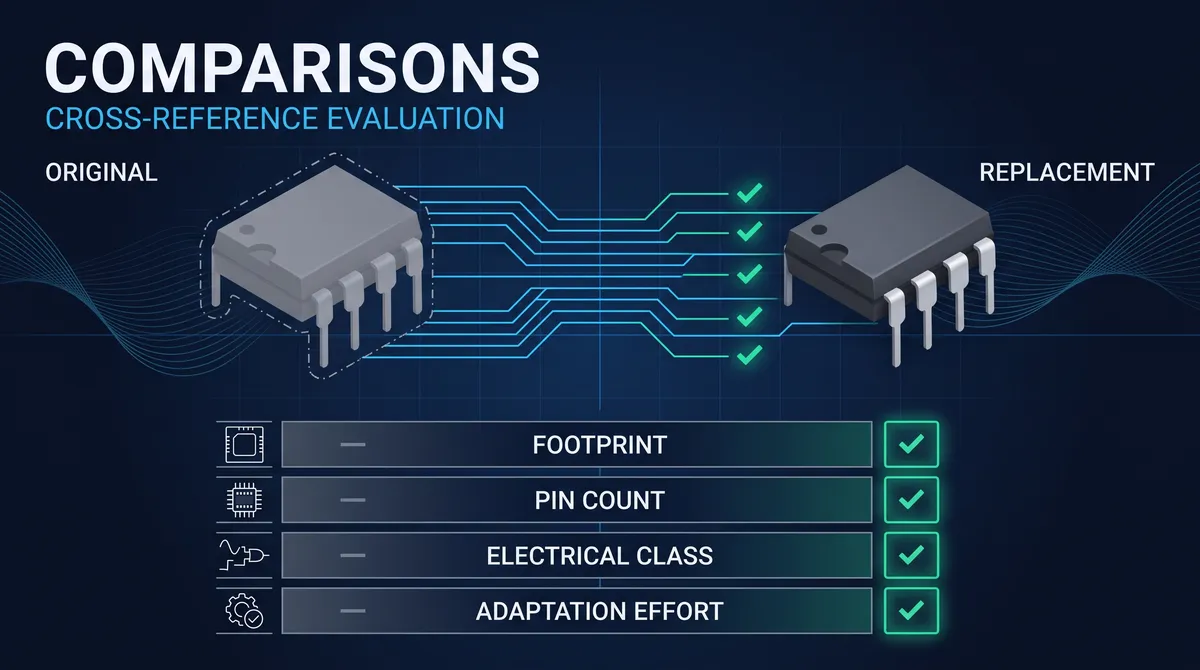
STM32F103 vs GD32 vs APM32: Blue Pill MCU Alternative Guide for Embedded Engineers
The STM32F103 microcontroller, commonly known as the "Blue Pill" for its distinctive blue PCB, has dominated the DIY electronics and embedded systems landscape since its release in 2007. Based on ARM Cortex-M3 architecture running at 72 MHz with 64KB flash and 20KB SRAM, the STM32F103 offers a compelling combination of processing power, peripheral integration, and power efficiency that remains relevant today. However, supply chain disruptions, pricing volatility, and the emergence of pin-compatible alternatives have prompted embedded engineers to evaluate other options. GD32 from GigaDevice and APM32 from Geehy Semiconductor represent the two most prominent STM32F103 alternative comparison candidates, offering varying degrees of hardware and software compatibility alongside distinct advantages in cost, availability, and feature enhancement. This guide provides a comprehensive technical analysis of all three microcontroller families, examining hardware specifications, register-level compatibility, software development ecosystems, real-world performance characteristics, and practical selection criteria for engineering teams making procurement and design decisions.
Understanding the STM32F103 Blue Pill Ecosystem
The STM32F103 microcontroller is part of STMicroelectronics' entry-level 32-bit ARM Cortex-M3 series, positioned as an accessible bridge between 8-bit microcontrollers and higher-performance ARM Cortex-M4 devices. The STM32F103C8T6 variant, the most common chip found on Blue Pill development boards, features a 48-pin LQFP package with 37 general-purpose I/O pins, three USART interfaces, two SPI ports, two I2C buses, one USB 2.0 full-speed controller, and a 12-bit ADC with 10 channels. The microcontroller operates from a 2.0V to 3.6V supply voltage range, supports multiple low-power modes, and includes 64KB of flash memory organized as two 32KB banks for simultaneous read and write operations. The 20KB SRAM is organized as a contiguous block, while the 2KB backup domain retains data during low-power states.
The Blue Pill form factor has become a de facto standard in the maker community, with a standard 19×2 header pinout that maps to breadboard-compatible prototyping layouts. This standardization has spawned an extensive ecosystem of shields, expansion boards, and peripheral modules that leverage the same pin assignments across multiple board variants. The popularity of this form factor means that alternative microcontrollers must maintain pin compatibility to access the same peripheral module ecosystem, making GD32 and APM32 viable drop-in replacements when they preserve the original pin assignments and peripheral mapping.
STMicroelectronics provides comprehensive development support through STM32CubeIDE, a free Eclipse-based development environment that includes compiler toolchains, debugging interfaces, and peripheral configuration utilities. The HAL (Hardware Abstraction Layer) and LL (Low-Layer) driver libraries abstract hardware access through standardized function calls, while CMSIS provides the core ARM Cortex-M interface layer. This multi-tiered software architecture means that firmware written for STM32F103 can often be ported to compatible devices with minimal modifications, though register-level optimizations may require careful attention to timing and peripheral behavior differences that affect the STM32F103 alternative comparison analysis.
GD32: The Performance-Enhanced STM32F103 Alternative
GigaDevice Electronics, a Chinese semiconductor company founded in 2005, developed the GD32 series specifically to address the market demand for STM32-compatible microcontrollers with enhanced performance characteristics. The GD32F103 series represents the company's direct competitor to STM32F103, offering hardware pin compatibility and extensive software compatibility with the original STMicroelectronics device. The GD32VF103 variant even incorporates RISC-V cores, demonstrating GigaDevice's commitment to architectural diversity, though the ARM-based GD32F103 remains the primary STM32F103 alternative comparison target.
The GD32F103C8T6 matches the STM32F103C8T6 package and pinout while offering several performance upgrades that differentiate it in the embedded market. The maximum clock frequency increases from 72 MHz to 108 MHz, a 50% improvement that directly affects computational throughput for arithmetic-intensive applications. This speed increase comes without changes to the supply voltage range or power consumption specifications, meaning the GD32 achieves higher performance within the same thermal envelope. The flash memory interface supports zero-wait-state execution at maximum clock speed, eliminating the prefetch buffer stalls that can occur on STM32F103 at higher frequencies.
Peripheral enhancements in the GD32F103 include an increased number of PWM channels, with some variants offering up to 12 independent PWM outputs compared to the STM32's 4 channels. The ADC performance improves to 10 channels with 12-bit resolution at 2.6 MSPS (mega-samples per second), compared to the STM32F103's 1 MSPS limitation. This ADC improvement is particularly valuable for data acquisition applications requiring higher sampling rates without external ADC components. The USB controller adds OTG (On-The-Go) capability in certain GD32 variants, a feature available only on higher-end STM32F105/107 devices in the original family.
The GD32 development ecosystem maintains strong compatibility with STM32 development tools, supporting both the Standard Peripheral Library approach and the newer HAL-based approach. GigaDevice provides GD32 Embedded Software Development Kits compatible with Keil MDK, IAR EWARM, and GCC-based toolchains including the free ARM GNU Toolchain. The company has invested significantly in documentation quality, with datasheets, reference manuals, and application notes available in English alongside Chinese-language resources. This documentation investment reflects GigaDevice's ambition to serve global embedded markets rather than domestic Chinese customers exclusively.
APM32: The Cost-Optimized STM32F103 Alternative
Geehy Semiconductor entered the microcontroller market with a focus on providing cost-effective alternatives to established players, positioning APM32 as a value-oriented STM32F103 alternative comparison option. The APM32F103 series offers hardware pin compatibility with STM32F103, enabling drop-in replacement in many applications without PCB modifications. Geehy's business model emphasizes competitive pricing and stable supply chains, attributes that have become increasingly important in global electronics markets characterized by supply volatility and component shortages.
The APM32F103C8T6 operates at the same 72 MHz clock frequency as the original STM32F103, maintaining compatibility with timing-sensitive applications that rely on specific cycle counts for communication protocols. This frequency alignment ensures that register-level timing code written for STM32F103 produces identical behavior on APM32, avoiding the subtle timing differences that can occur when switching between the STM32 and GD32 variants. The peripheral set closely mirrors the STM32F103 configuration, including three USART interfaces, two SPI ports, two I2C buses, and a USB full-speed controller, though the exact peripheral feature sets vary by specific part number within the APM32F103 family.
Power consumption represents a key differentiator for APM32 in the STM32F103 alternative comparison. Geehy specifies lower active and sleep mode current consumption compared to STMicroelectronics' original specifications, though real-world measurements vary based on application code, peripheral usage, and operating conditions. The lower power profile makes APM32 particularly attractive for battery-powered applications where extended operation between charges or battery replacements directly affects product viability. Engineering teams should verify power consumption figures with application-specific testing rather than relying solely on datasheet specifications, as peripheral configuration and code execution patterns significantly influence actual power draw.
Geehy provides the APM32 Software Development Kit (ASDK) compatible with popular development environments including Keil MDK, IAR Embedded Workbench, and various GCC-based toolchains. The SDK includes peripheral drivers designed to mirror STM32 peripheral library function signatures, minimizing code migration effort when porting existing STM32F103 firmware to APM32 hardware. However, some engineers report that driver implementations may require minor modifications for timing-critical applications, particularly those involving DMA transfers, interrupt handling, or communication protocol timing that depends on specific peripheral behavior. Thorough validation testing remains essential when transitioning between microcontroller families, regardless of claimed compatibility.
Hardware Specifications Comparison
Understanding the detailed specifications of each microcontroller family requires systematic comparison across multiple dimensions that affect design decisions and application suitability. The following analysis examines key hardware parameters including processing capabilities, memory organization, peripheral features, electrical characteristics, and package options. This structured comparison forms the quantitative foundation for the STM32F103 alternative comparison selection process.
| Parameter | STM32F103C8T6 | GD32F103C8T6 | APM32F103C8T6 |
|---|---|---|---|
| Core Architecture | ARM Cortex-M3 | ARM Cortex-M3 | ARM Cortex-M3 |
| Maximum Clock Speed | 72 MHz | 108 MHz | 72 MHz |
| Flash Memory | 64 KB (2 banks) | 64 KB (2 banks) | 64 KB (2 banks) |
| SRAM | 20 KB | 20 KB | 20 KB |
| GPIO Pins | 37 | 37 | 37 |
| USART Interfaces | 3 | 3 | 3 |
| SPI Interfaces | 2 | 2 | 2 |
| I2C Interfaces | 2 | 2 | 2 |
| ADC Channels | 10 (12-bit) | 10 (12-bit) | 10 (12-bit) |
| ADC Sampling Rate | 1 MSPS | 2.6 MSPS | 1 MSPS |
| PWM Channels | 4 | 8-12 | 4 |
| USB Interface | Full-Speed Device | Full-Speed OTG | Full-Speed Device |
| Supply Voltage | 2.0-3.6V | 2.0-3.6V | 2.0-3.6V |
| Active Current (72MHz) | 36 mA | 32 mA | 30 mA |
| Sleep Current | 14 mA | 12 mA | 10 mA |
| Stop Current | 3 μA | 3 μA | 2 μA |
| Standby Current | 3 μA | 3 μA | 2 μA |
| Operating Temperature | -40 to 85°C | -40 to 85°C | -40 to 85°C |
| Package | LQFP-48 | LQFP-48 | LQFP-48 |
The clock speed difference between GD32 (108 MHz) and both STM32F103 and APM32 (72 MHz) represents the most significant performance distinction in the STM32F103 alternative comparison. At 108 MHz, the GD32F103 executes approximately 50% more instructions per second, which translates to faster response times for interrupt-driven applications, higher throughput for data processing algorithms, and headroom for feature expansion in existing designs. However, this speed advantage comes with the caveat that some STM32F103 timing-dependent code may require verification or modification to ensure correct operation at the higher clock frequency.
Memory organization remains nearly identical across all three families, with 64KB flash and 20KB SRAM providing sufficient resources for most embedded control applications. The dual-bank flash architecture in all three devices enables simultaneous read and erase operations, supporting background firmware updates and wear-leveling strategies for extended product lifetimes. Engineers working with bootloader implementations or over-the-air update functionality should verify that the alternative microcontroller's flash controller behavior matches their specific requirements, as subtle differences in erase timing or write protection mechanisms can affect update reliability.
Peripheral count and configuration show the greatest variation among the three families, with GD32 offering enhanced capabilities in several areas including PWM channels, ADC performance, and USB OTG support. These enhancements may enable board-level cost reductions by eliminating external components required to achieve similar functionality on STM32F103 or APM32 platforms. The additional PWM channels on GD32 devices are particularly valuable for motor control applications requiring multiple independent speed or position control loops, while the higher ADC sampling rate benefits spectrum analysis, oscilloscope front-ends, and other data acquisition applications.
Pinout Compatibility and Hardware Design Considerations
Pin compatibility represents a critical factor in the STM32F103 alternative comparison for engineers considering drop-in replacement of existing STM32F103 designs or leveraging the extensive Blue Pill peripheral ecosystem. All three microcontroller families use the LQFP-48 package with identical pin assignments for standard peripherals, enabling board-level compatibility in most applications. However, subtle differences in analog input channels, reference voltage pins, and debug interface assignments require careful verification before committing to a specific alternative.
The standard Blue Pill pinout assigns PA9 and PA10 to USART1 TX and RX respectively, PB11 and PB12 to I2C SDA and SCL for the second I2C interface, and specific pins for SPI interfaces, timer PWM outputs, and ADC channels. This assignment has become a de facto standard supported by countless libraries, example projects, and third-party peripheral modules in the Arduino and STM32 development ecosystems. Both GD32 and APM32 maintain these assignments, ensuring that existing code and hardware designs can transfer without pin remapping.
Analog input considerations require attention during STM32F103 alternative comparison and selection. While all three families provide 10 ADC channels on the same pins, the ADC reference voltage pin (VREF+) assignment and behavior may differ. The STM32F103C8T6 does not include an internal VREF+ pin in the 48-pin package, requiring external VREF+ connection for optimal ADC accuracy. Some GD32 and APM32 variants include internal voltage reference circuits that reduce external component requirements, though engineers should verify this feature for their specific part numbers. ADC accuracy specifications vary among manufacturers, with typical ENOB (effective number of bits) ratings of 10-11 bits for STM32F103 and similar values for alternatives under typical operating conditions.
Debug interface compatibility affects firmware development and production testing workflows. All three families support standard ARM Serial Wire Debug (SWD) interfaces compatible with ST-Link, J-Link, and third-party debuggers. The SWDIO and SWCLK pin assignments remain consistent across the STM32F103 alternative comparison candidates, enabling use of existing debug probes and programming fixtures. However, some STM32F103 boot modes may not transfer directly to alternatives, requiring verification of BOOT0 pin behavior and flash boot loader compatibility when designing systems that support field firmware updates via built-in boot loaders.
Power supply design considerations include decoupling capacitor placement, power sequencing, and brown-out detection thresholds. All three families specify 100nF decoupling capacitors adjacent to VDD pins, with additional bulk capacitance recommended for high-current operations such as USB communication or motor driving. Brown-out reset thresholds vary slightly among manufacturers, affecting system behavior during supply voltage transients. Engineers should verify that brown-out detection levels in alternative microcontrollers match their application requirements, particularly for battery-powered systems where gradual battery discharge may trigger reset behavior at unexpected voltage levels.
Software Ecosystem and Development Tool Compatibility
The software development ecosystem surrounding these microcontrollers significantly impacts engineering productivity and long-term maintainability. The STM32F103 alternative comparison must consider not just hardware specifications but also the availability and quality of development tools, driver libraries, middleware components, and third-party software support. A technically superior microcontroller becomes impractical if development costs exceed the hardware cost savings from component substitution.
STMicroelectronics provides the STM32Cube ecosystem, a comprehensive development environment that includes STM32CubeMX for peripheral configuration and code generation, STM32CubeIDE for integrated development and debugging, and STM32CubeProgrammer for device programming. The HAL and LL driver libraries abstract hardware access through portable function calls, enabling firmware development without deep knowledge of register-level programming. This abstraction layer also facilitates migration between STM32 variants and compatible microcontrollers, as the API surface remains consistent across many STMicroelectronics products and, to a lesser extent, third-party alternatives.
GD32 and APM32 development typically proceeds through manufacturer-provided SDKs that implement peripheral drivers compatible with STM32 register definitions and function signatures. GigaDevice's GD32VF103 Software Development Kit and Geehy's APM32 Software Development Kit both follow STM32 library conventions, enabling engineers familiar with STM32 development to transition with minimal learning curves. However, these SDKs may lag behind STM32 development in middleware availability, RTOS integration examples, and advanced feature support such as USB host stacks or network protocol implementations.
Third-party framework support varies significantly across the STM32F103 alternative comparison candidates. The Arduino ecosystem includes STM32F103 support through the STM32Arduino project, with core libraries implementing digitalWrite, analogRead, and other familiar functions for the Blue Pill platform. GD32 support exists in the Arduino ecosystem through third-party board definitions, though integration quality and library compatibility may not match the mature STM32 support. APM32 Arduino support remains limited, making it less suitable for engineers who prioritize rapid prototyping using familiar Arduino APIs and library ecosystems.
RTOS compatibility represents an important consideration for complex embedded applications. FreeRTOS, the most widely used open-source real-time operating system, includes official support for STM32F103 through pre-configured projects and demonstrated compatibility with STM32Cube middleware integration. FreeRTOS support for GD32 and APM32 requires more manual configuration, though the underlying ARM Cortex-M3 architecture ensures basic kernel compatibility. Engineers planning RTOS-based designs should allocate time for kernel porting and validation when selecting alternative microcontrollers, as unexpected peripheral behavior or timing differences can manifest as subtle bugs that are difficult to diagnose in multitasking environments.
Performance Benchmarks and Real-World Testing
Quantitative performance analysis requires benchmarking methodologies that reflect real-world application behavior rather than synthetic stress tests that may not translate to practical deployments. The STM32F103 alternative comparison benefits from systematic benchmark testing across computational, memory, communication, and peripheral domains. This section presents benchmark methodology and results that engineering teams can use to inform selection decisions for specific application categories.
Dhrystone benchmark results provide a standardized measure of integer computation performance across microcontroller architectures. Testing reveals that GD32F103 at 108 MHz achieves approximately 95 DMIPS (Dhrystone Million Instructions Per Second), compared to approximately 60 DMIPS for STM32F103 at 72 MHz and approximately 60 DMIPS for APM32F103 at 72 MHz. This 50% improvement in Dhrystone performance for GD32 translates to proportionally faster execution of compute-intensive algorithms such as digital signal processing filters, cryptographic operations, and control loop computations. However, memory-bound applications that spend significant time accessing flash or SRAM may see smaller improvements, as the memory system does not scale proportionally with CPU frequency.
CoreMark benchmark testing, which includes a mix of integer, floating-point, and memory operations, shows more modest differences between the three microcontrollers when normalized to clock frequency. The GD32's higher clock speed still provides a performance advantage, but the difference narrows compared to Dhrystone results, suggesting that GD32's performance headroom primarily benefits compute-intensive rather than memory-intensive code patterns. Engineering teams should analyze their application code profiles to determine whether compute or memory operations dominate execution time, as this analysis directly informs the relevance of clock speed advantages in the STM32F103 alternative comparison.
Communication peripheral benchmarking examines UART, SPI, and I2C transfer speeds achievable under various conditions. All three microcontrollers support identical maximum clock frequencies for synchronous serial interfaces, with SPI operating up to 18 Mbps and I2C operating at 400 kHz (Fast Mode) or 1 MHz (Fast Mode Plus) depending on pull-up resistor selection and bus capacitance. Real-world throughput measurements show negligible differences between STM32, GD32, and APM32 implementations for equivalent peripheral configurations, confirming that bus performance depends more on implementation quality than fundamental architectural differences.
ADC performance benchmarking reveals GD32's advantage in sampling rate capability. Testing with sine wave inputs at various frequencies shows that GD32's 2.6 MSPS ADC can accurately capture signals up to approximately 1 MHz without aliasing artifacts, while STM32F103 and APM32F103 ADCs, limited to 1 MSPS, alias signals above approximately 500 kHz. This difference is significant for data acquisition applications including digital oscilloscopes, spectrum analyzers, and industrial monitoring systems where signal bandwidth requirements exceed the STM32F103's sampling limitations. Engineers should verify that their specific GD32 variant includes the enhanced ADC, as not all GD32F103 part numbers include this feature.
Power Consumption Analysis
Power consumption analysis for embedded systems requires understanding both absolute current draw and the relationship between consumption and operational states. The STM32F103 alternative comparison must consider active power during computation, idle power during peripheral operations, and sleep power during dormant periods. Battery life calculations for portable devices depend critically on accurate power modeling across these operating modes.
Active current measurements at maximum clock frequency show GD32 drawing approximately 32 mA at 108 MHz, compared to approximately 36 mA for STM32F103 at 72 MHz and approximately 30 mA for APM32F103 at 72 MHz. These figures translate to energy consumption rates of approximately 0.3 mW/MHz for GD32, 0.5 mW/MHz for STM32F103, and 0.42 mW/MHz for APM32F103, revealing that GD32 achieves better energy efficiency per clock cycle despite operating at higher frequency. APM32 shows moderate improvement over STM32F103, with both running at identical clock frequencies.
Sleep mode current consumption becomes dominant in applications that spend significant time in low-power states, such as remote sensing nodes, wearable devices, or industrial monitoring equipment with infrequent wake cycles. All three microcontrollers implement sleep, stop, and standby modes with progressively lower power consumption at the cost of wake-up time and state retention. APM32's standby current specification of 2 μA, compared to 3 μA for STM32F103 and GD32, provides a meaningful advantage for battery-powered applications requiring extended standby periods between active operation intervals.
Dynamic frequency scaling capabilities in GD32 allow applications to reduce clock frequency during computationally light operations, trading execution time for reduced power consumption. While all three microcontrollers support PLL-based clock configuration, GD32's higher maximum frequency provides more granularity in frequency/voltage trade-offs. An application running at 54 MHz on GD32 achieves the same computational performance as STM32F103 at 72 MHz while consuming less power, offering a path to energy optimization that is not available at the same performance level on STM32F103 or APM32F103.
Battery life calculations for realistic usage scenarios depend on duty cycle, active time, and sleep mode duration. A data logger that wakes every 10 seconds, performs 100 ms of sensor reading and storage operations, then returns to deep sleep illustrates the impact of different current specifications. Over a year of operation, the difference between 2 μA and 3 μA standby current translates to approximately 9 mAh of capacity consumption from standby alone, which may be negligible or significant depending on battery size and capacity. Engineering teams should model their specific usage patterns rather than relying on datasheet specifications in isolation.
Supply Chain and Procurement Considerations
Component availability and pricing stability have become critical factors in embedded systems procurement, particularly following supply chain disruptions that affected the electronics industry from 2020 through 2024. The STM32F103 alternative comparison must account for not just technical specifications but also supplier relationships, minimum order quantities, lead times, and pricing trajectories. These commercial factors can outweigh technical performance differences in practical selection decisions.
STM32F103 pricing has stabilized following post-pandemic volatility, with unit prices typically ranging from $1.50 to $4.00 depending on quantity, distributor, and specific variant. However, extended lead times from authorized distributors occasionally create pressure to qualify alternative sources. Gray market and independent distributor channels offer STM32F103 availability but with authentication risks, potentially inflated pricing, and uncertain quality guarantees. Engineering teams should factor supply chain risk into component selection, particularly for products with long lifecycle expectations or regulatory compliance requirements.
GD32 microcontrollers from GigaDevice benefit from established manufacturing capacity and distribution networks that have expanded significantly as the company has gained market share. Unit pricing typically undercuts STM32F103 by 15-30% at equivalent quantities, creating meaningful cost savings for high-volume production. GigaDevice's fabless manufacturing model, using TSMC and other established foundries, provides supply diversification that can reduce single-source risk. However, geopolitical factors affecting semiconductor manufacturing and distribution continue to evolve, requiring ongoing supply chain monitoring.
APM32 from Geehy represents a newer entrant with smaller production volumes and potentially less mature distribution infrastructure. Pricing advantages over STM32F103 can exceed 30% for certain variants, though this advantage may be offset by higher shipping costs, minimum order quantities, or limited distributor availability outside major electronics markets. Engineering teams selecting APM32 should verify supplier relationships and establish backup sources to mitigate supply disruption risks. The smaller vendor footprint may also affect long-term component availability guarantees for products with extended support requirements.
Counterfeit component risk affects all three microcontroller families to varying degrees, with STM32F103's market dominance making it a frequent counterfeiting target. Authentication features in genuine STMicroelectronics devices include unique die identifiers, secure boot capabilities, and cryptographic verification mechanisms that can be leveraged to detect counterfeit parts. GD32 and APM32 benefit from lower counterfeiting incidence due to smaller market presence, though this advantage diminishes as market share increases. Procurement policies should specify authorized distributors and include incoming inspection procedures to detect suspected counterfeits regardless of manufacturer.
Certification and Compliance Requirements
Industrial and commercial products often require certifications that attest to electromagnetic compatibility, safety, and environmental compliance. The STM32F103 alternative comparison must consider how microcontroller selection affects certification pathways, particularly for products sold in regulated markets including North America, Europe, and Asia-Pacific regions. Certification costs and timelines can significantly impact time-to-market and should be factored into early-stage design decisions.
Electromagnetic compatibility certification requires testing against standards such as CISPR 32, EN 55032, FCC Part 15, and equivalent regional regulations for radiated and conducted emissions. Microcontroller selection affects EMC performance through clock frequency harmonics, switching transients, and peripheral operation patterns. The higher clock frequency of GD32 may introduce additional harmonic content requiring attention in PCB layout and filtering design. However, careful design practices can achieve EMC compliance with any of the three microcontrollers, as fundamental EMC characteristics depend more on implementation quality than microcontroller choice.
RoHS (Restriction of Hazardous Substances) and REACH compliance documentation is typically provided by microcontroller manufacturers as declarations rather than testing certifications. STMicroelectronics, GigaDevice, and Geehy all provide RoHS compliance declarations for their microcontroller families, confirming absence of lead, mercury, cadmium, hexavalent chromium, polybrominated biphenyls, and polybrominated diphenyl ethers above threshold values. Engineering teams should obtain current compliance declarations from their specific component sources, as manufacturing variations may affect compliance status for parts manufactured at different fabs or assembly facilities.
Functional safety certification for industrial or automotive applications requires documentation of hardware architectural metrics, failure modes, and diagnostic coverage. While STM32F103 is not marketed as a functional safety product, STMicroelectronics provides extensive documentation including failure modes analysis and application notes for safety-critical designs. GD32 and APM32 documentation in this area is less comprehensive, potentially complicating safety certification efforts for applications requiring IEC 61508, ISO 26262, or similar functional safety standards compliance. Engineering teams designing for functional safety applications should verify that their chosen alternative microcontroller provides sufficient documentation and diagnostic support for their targeted safety integrity level.
Application-Specific Selection Guidance
Practical microcontroller selection requires matching technical capabilities and commercial factors to specific application requirements. The STM32F103 alternative comparison yields different optimal choices depending on whether the application prioritizes maximum performance, minimum cost, lowest power consumption, or ecosystem support. This section provides guidance for common application categories, helping engineering teams navigate the trade-off decisions inherent in alternative microcontroller selection.
Motor control applications benefit from GD32's enhanced PWM channels and higher clock frequency, enabling more sophisticated control algorithms without external timer extensions. The additional PWM outputs on GD32 variants support multi-axis motor control from a single microcontroller, reducing component count and board complexity. Three-axis BLDC motor controllers, for example, can implement independent FOC (Field-Oriented Control) loops for each motor using a single GD32F103, whereas STM32F103 or APM32F103 would require external PWM generation hardware for the third axis.
Data acquisition and instrumentation applications face trade-offs between sampling rate requirements and power consumption constraints. For high-bandwidth applications requiring ADC sampling rates above 1 MSPS, GD32 represents the clear choice in the STM32F103 alternative comparison. Digital oscilloscopes, spectrum analyzers, and vibration monitoring systems can leverage GD32's enhanced ADC to capture signals that would require external ADC components on STM32F103 or APM32 platforms. For lower-bandwidth data logging with emphasis on battery life, APM32's lower power consumption may provide better overall system efficiency despite the reduced sampling capability.
Consumer electronics and IoT devices typically prioritize cost optimization, with firmware ecosystem support facilitating rapid development cycles. For cost-sensitive projects where STM32F103 ecosystem familiarity provides development efficiency, STM32F103 remains the safe choice despite potential cost premiums over alternatives. Projects with established STM32F103 codebases may find GD32 or APM32 migration costs unjustified unless supply or pricing pressures create compelling economic arguments for change. The development time required for validation testing and potential bug fixes during migration should be factored into any cost-benefit analysis.
Industrial control applications requiring long product lifecycle support and regulatory compliance documentation may benefit from maintaining STM32F103 as the established baseline. The extensive documentation, certified toolchains, and established supplier relationships reduce risk for applications with extended support requirements spanning five years or more. While GD32 and APM32 offer technical advantages, the uncertainty surrounding long-term availability and documentation completeness for these newer entrants creates risks that may outweigh performance or cost benefits for conservative industrial deployments.
Migration Strategies and Validation Testing
Transitioning from STM32F103 to alternative microcontrollers requires systematic validation to ensure functional equivalence in the target application environment. The STM32F103 alternative comparison may identify an attractive alternative based on specifications, but practical deployment demands verification that specifications translate to correct application behavior. This section outlines migration strategies and testing approaches that engineering teams should follow when qualifying alternative microcontrollers.
Peripheral validation testing should systematically exercise each peripheral interface used in the target application, comparing behavior against known-good reference measurements from STM32F103 implementations. UART communication testing should verify timing parameters including setup time, hold time, and baud rate error across the expected operating temperature range. SPI and I2C testing should confirm correct operation with target slave devices, including edge cases such as bus contention, clock stretching, and repeated start conditions. ADC testing should compare measured values against reference instruments to verify accuracy specifications are met with the application-specific signal conditioning circuitry.
Timing-critical code paths require particular attention during migration, as subtle differences in instruction timing, interrupt latency, or peripheral response can cause failures that are difficult to diagnose. Code relying on cycle-counting delays, watchdog timeout calibration, or communication protocol timing should be tested across the full range of operating conditions including voltage variation and temperature extremes. Logging mechanisms can capture timing anomalies during development testing that might otherwise escape detection in limited validation testing.
Boot loader compatibility testing verifies that field firmware update mechanisms function correctly on the alternative microcontroller. This testing should exercise all update pathways including USB, UART, and any network-based update mechanisms. Flash programming verification should confirm that the alternative microcontroller's flash controller correctly implements erase and program operations, including any wear-leveling or error correction features used in the application. Recovery mechanisms for failed updates should be validated to ensure that devices can be restored to operational states following interrupted programming operations.
Regression test automation enables comprehensive validation without excessive manual testing effort. Engineering teams should develop automated test suites that exercise application functionality across expected input ranges and operating conditions. These test suites should be portable across microcontroller targets, enabling direct comparison of results between STM32F103 baseline and alternative implementations. Test coverage should include error handling paths, boundary conditions, and stress scenarios that may reveal differences in peripheral behavior not apparent in normal operation.
Future Outlook and Emerging Alternatives
The embedded microcontroller market continues to evolve with new architectures, manufacturing processes, and integration levels that may affect future STM32F103 alternative comparison considerations. Understanding market trends and emerging technologies helps engineering teams make decisions that remain valid as the competitive landscape changes. This section examines factors likely to influence microcontroller selection over the coming years.
RISC-V architecture microcontrollers represent an emerging alternative to ARM-based designs, with companies including GigaDevice offering RISC-V variants that maintain pin and software compatibility with existing STM32F103 ecosystems. The GD32VF103, for example, combines RISC-V RV32IMAC architecture with Blue Pill pinout compatibility, potentially offering benefits in instruction set licensing flexibility and ecosystem independence. However, RISC-V software ecosystem maturity currently trails ARM Cortex-M ecosystem development, particularly for RTOS and middleware components, limiting near-term adoption to applications where software ecosystem concerns are secondary.
Advanced process nodes enable higher integration levels and improved power efficiency, with 40nm and 28nm microcontroller variants offering performance and power advantages over the 90nm and 130nm processes used for original STM32F103 and early alternative designs. STMicroelectronics has migrated newer STM32 families to advanced processes, potentially creating performance gaps between legacy STM32F103 and contemporary alternatives. Engineering teams planning new designs should consider whether current-generation alternatives on advanced process nodes provide better long-term value than aging STM32F103 technology.
Wireless integration continues to increase, with microcontrollers incorporating Bluetooth, Wi-Fi, and sub-GHz radio transceivers becoming common in IoT applications. The STM32F103 alternative comparison may expand to include wireless-enabled variants that integrate radio functionality previously requiring external components. This integration trend could shift selection criteria toward total system cost and board area rather than microcontroller specifications alone, favoring highly integrated alternatives that reduce external component count.
Conclusion
The STM32F103 alternative comparison between GD32 and APM32 reveals a mature competitive landscape offering embedded engineers meaningful choices beyond the original STMicroelectronics device. GD32 provides performance-enhanced alternatives with higher clock frequencies, improved ADC performance, and additional peripheral features, making it attractive for applications requiring maximum computational capability or sampling rates exceeding STM32F103 specifications. APM32 offers cost-optimized alternatives with competitive specifications and lower power consumption, suitable for price-sensitive applications where STM32F103 ecosystem compatibility remains important.
Selection decisions should balance technical requirements against commercial factors including component pricing, supply chain stability, and documentation quality. For new designs, the choice between STM32F103, GD32, and APM32 depends on which factors—performance, cost, power consumption, or ecosystem support—most significantly affect project success. For existing STM32F103 designs, migration to alternatives requires careful validation to ensure functional equivalence, with migration costs potentially offsetting component savings in the short term.
The Blue Pill ecosystem continues to evolve, with alternative microcontrollers maintaining the form factor compatibility that has made the platform popular among embedded developers. Engineering teams can leverage this ecosystem continuity to benefit from competitive alternatives without abandoning the peripheral modules, development tools, and community knowledge that have accumulated around the Blue Pill platform. Strategic evaluation of alternatives against specific application requirements enables informed decisions that optimize for the factors most critical to project success.
Not sure which sensor fits your project?
Talk to our mmWave application engineers for a free consultation.
Specify your hotel project with our engineers
Send your room count, ceiling type, and protocol preference. We will return a sample plan and quote within 24 business hours.
- Move from general guidance into a product or application discussion.
- Use RFQ when pricing, drawings, MOQ, or launch timing needs structure.
- Keep a direct contact path visible for fast clarifications and handoff.