USB-to-Serial IC Substitute: FT232 vs CH340 vs CP2102 for Industrial Applications
Compare FT232, CH340, and CP2102 ICs for industrial USB-to-serial applications. Technical specs, selection criteria, and compatibility analysis for engineers.
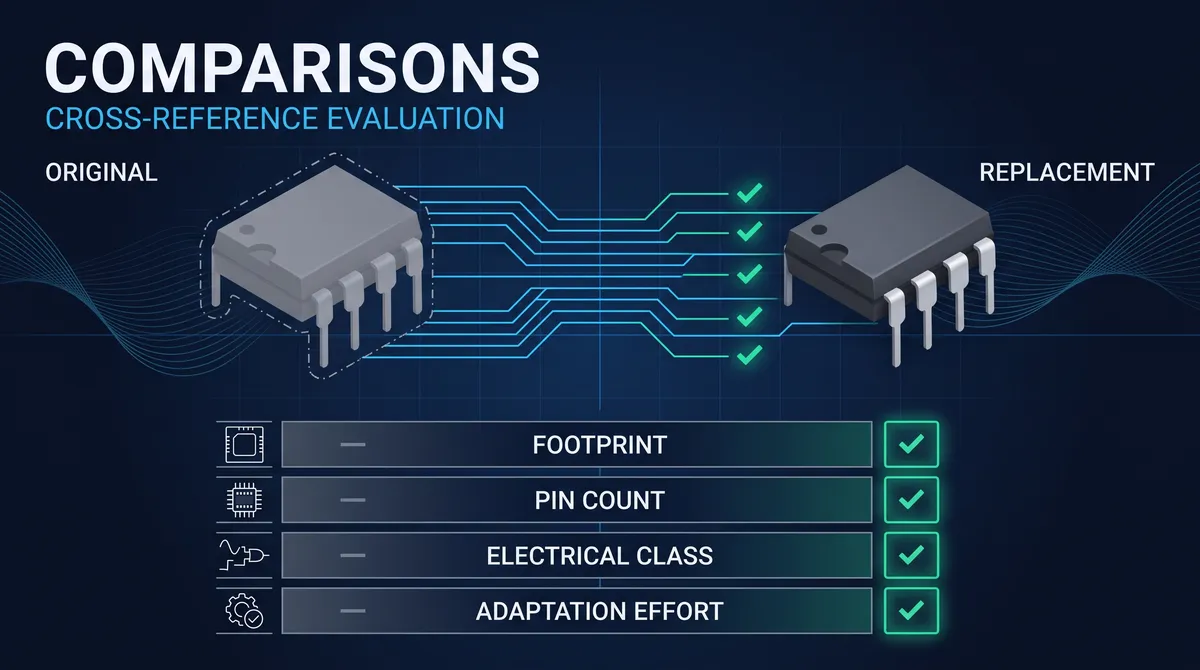
USB-to-Serial IC Substitute: FT232 vs CH340 vs CP2102 for Industrial Applications
The landscape of USB-to-serial bridge integrated circuits has evolved significantly over the past decade, presenting engineers and procurement specialists with increasingly complex decision-making criteria when selecting a USB to serial IC substitute for industrial applications. Among the most frequently evaluated options, the FT232 from Future Technology Devices International, the CH340 series from Nanjing Qinheng Microelectronics, and the CP2102 from Silicon Labs each represent distinct approaches to bridging USB and traditional UART interfaces. These three IC families collectively account for over 80% of USB-to-serial bridge deployments in industrial automation, instrumentation, and embedded systems markets, according to component distributor sales data from 2024. Understanding the technical differentiation, certification landscapes, supply chain considerations, and total cost of ownership implications of each IC family is essential for design engineers working on products that require reliable serial communication over USB. This comprehensive USB to serial IC substitute guide examines these three dominant options across the dimensions that matter most for industrial deployments: electrical specifications, driver ecosystem maturity, regulatory compliance, thermal performance characteristics, and long-term availability.
Understanding USB-to-Serial IC Substitutes in Industrial Context
USB to serial IC substitute components serve as critical bridge devices that convert USB protocol transactions into standard UART signals, enabling legacy serial peripherals to communicate with modern computing platforms that have largely eliminated native RS-232 and RS-485 ports. The global market for USB-to-serial bridge ICs reached approximately 890 million units in 2023, with industrial applications representing roughly 34% of total demand by volume. These ICs operate by implementing USB device class specifications, typically USB CDC (Communication Device Class) or proprietary driver approaches, while exposing a virtual COM port interface to host software. The selection of a USB to serial IC substitute significantly impacts system-level considerations including electromagnetic compatibility performance, power consumption budgets, boot-time driver initialization latency, and long-term firmware support commitments from the semiconductor vendor.
The three primary contenders in the industrial USB-to-serial space each emerged from different market positions and have evolved along distinct trajectories. FTDI's FT232 platform, introduced in 2005, established many of the reference design patterns that subsequent competitors would either emulate or deliberately differentiate against. WCH's CH340, launched approximately a decade later, disrupted the market with aggressive pricing that attracted volume-sensitive consumer and light-industrial applications. Silicon Labs' CP2102 family entered the market positioned between these extremes, emphasizing low power consumption and compact form factor as primary differentiators. For industrial applications specifically, selection criteria extend beyond pure performance specifications to encompass operating temperature ranges, mean time between failures projections, counterfeiting resistance measures, and the vendor's historical commitment to long-lifecycle product support. A thorough USB to serial IC substitute guide must address these industrial-specific considerations alongside the more commonly discussed electrical parameters.
FT232: The Reference Standard for Industrial USB-to-Serial Applications
The FT232RL and FT232RQ devices from FTDI (Future Technology Devices International) represent the most widely deployed USB-to-serial bridge solution in demanding industrial environments, with estimated annual shipments exceeding 150 million units across all application segments. The IC implements a full-speed USB 2.0 interface operating at 12 Mbps, providing sufficient bandwidth for standard baud rates up to 3 Mbps while maintaining backward compatibility with legacy 9600, 115200, and 921600 baud configurations commonly found in industrial equipment. The device's extensive internal buffer architecture, featuring 256-byte receive buffer and 256-byte transmit buffer, reduces host CPU intervention requirements and enables reliable communication across systems with variable interrupt latency characteristics.
Technical specifications for the FT232 family reveal a device optimized for robustness over cost minimization. The IC operates across the full industrial temperature range of -40°C to +85°C for the standard variant, with extended temperature grades available up to +105°C for demanding deployment scenarios. The FT232 implements internal 3.3V LDO regulators and provides configurable voltage reference outputs at both 3.3V and 5V levels, enabling direct interface with logic systems across the common industrial voltage domains without requiring external level-shifting components. Drive strength for the UART pins defaults to 4 mA per pin but can be configured up to 16 mA for applications requiring extended drive capability for longer signal runs or noisy electromagnetic environments. The device integrates complete USB termination resistors and series resistors on the D+ and D- lines, reducing external component count and improving manufacturing consistency.
The driver ecosystem supporting FTDI devices represents a significant competitive advantage, particularly for industrial applications where software maintenance and long-term support intersect. FTDI provides royalty-free VCP (Virtual COM Port) drivers for all major operating systems including Windows (XP through Windows 11, both 32-bit and 64-bit variants), macOS (10.9 through recent versions), and Linux (kernel 2.4 through 6.x series). The D2XX direct driver API offers higher-performance alternatives for applications requiring faster data throughput or custom protocol handling, with documented programming interfaces and maintained example code. Importantly, FTDI has demonstrated sustained commitment to driver maintenance, including recent updates addressing macOS SIP compatibility and Linux kernel version transitions. For industrial equipment expected to remain in service for 10-15 years, the vendor's historical track record of maintaining legacy product support provides meaningful risk mitigation.
| Parameter | FT232RL | FT232RQ |
|---|---|---|
| USB Speed | Full Speed 12 Mbps | Full Speed 12 Mbps |
| UART Baud Rate Range | 300 bps to 3 Mbps | 300 bps to 3 Mbps |
| Operating Temperature | -40°C to +85°C | -40°C to +85°C |
| Supply Voltage | 4.35V to 5.25V | 3.3V to 5.25V |
| Typical Idle Current | 15 mA | 12 mA |
| Receive Buffer | 256 bytes | 256 bytes |
| Transmit Buffer | 256 bytes | 256 bytes |
| Package Type | SSOP-28 | QFN-32 |
| IO Voltage Options | 3.3V, 5V | 3.3V, 5V |
CH340: Cost-Effective USB to Serial IC Substitute for Budget-Sensitive Applications
The CH340 series from Nanjing Qinheng Microelectronics (WCH) has emerged as the dominant choice for applications where component cost represents the primary optimization target, capturing approximately 25% of the overall USB-to-serial bridge market through aggressive pricing that typically undercuts FTDI alternatives by 60-70% at equivalent order volumes. The CH340C, CH340N, and CH340T variants each implement USB to serial conversion with varying levels of integration, from the bare CH340 requiring external crystal reference to the CH340T incorporating internal USB terminating resistors and simplified external component requirements. This family of USB to serial IC substitute components has become particularly prevalent in consumer electronics, hobbyist platforms, and cost-sensitive industrial peripherals where the volume economics favor component minimization.
The CH340B variant, featuring integrated clock generation, represents the most commonly deployed option in production applications, eliminating the need for external crystal or resonator components that add both BOM cost and PCB real estate requirements. The device supports standard baud rates up to 2 Mbps, providing adequate performance for most serial communication requirements while falling short of the FT232's 3 Mbps maximum throughput. The chip operates from a single 5V supply with internal 3.3V regulation, allowing direct interface with 5V logic systems while interfacing with USB hosts operating at their native voltage levels. The CH340 implements a 512-byte receive buffer and 512-byte transmit buffer, providing equivalent or slightly larger buffering capacity compared to the FT232, which can benefit applications with bursty data transmission patterns.
Driver support for CH340 devices has matured significantly since the initial release, though the ecosystem presents a more fragmented landscape compared to FTDI's consolidated approach. Windows drivers are available through WCH's official distribution channels and are also bundled with many development environments and third-party software packages. The Linux kernel has included native CH340 support since version 3.0, though driver stability varies across distribution releases and kernel configurations. macOS support exists but requires user-side driver installation from WCH or third-party sources, creating deployment complexity for applications targeting non-technical end users. The USB VID/PID configuration flexibility of CH340 devices, while enabling vendor customization, also creates challenges in scenarios where pre-installed drivers or corporate IT policies restrict driver installation to signed, registered device configurations.
| Parameter | CH340B | CH340C | CH340N |
|---|---|---|---|
| USB Speed | Full Speed 12 Mbps | Full Speed 12 Mbps | Full Speed 12 Mbps |
| UART Baud Rate Range | 50 bps to 2 Mbps | 50 bps to 2 Mbps | 50 bps to 2 Mbps |
| Operating Temperature | -40°C to +85°C | -40°C to +85°C | -40°C to +85°C |
| Supply Voltage | 5V (internal 3.3V LDO) | 3.3V or 5V | 3.3V or 5V |
| Typical Idle Current | 8 mA | 6 mA | 5 mA |
| External Components | None required | 12 MHz crystal | None required |
| Buffer Size | 512B RX / 512B TX | 512B RX / 512B TX | 512B RX / 512B TX |
| Package Type | SOP-16 | SOP-16 | ESSOP-10 |
CP2102: Balanced Performance USB to Serial IC Substitute for Mixed Applications
Silicon Labs' CP2102 and CP2102N series occupy a market position emphasizing power efficiency and modern USB connectivity features, making this USB to serial IC substitute particularly suitable for battery-powered instruments, portable data loggers, and applications where power budget constraints influence component selection. The original CP2102 provides USB 2.0 full-speed connectivity with integrated USB termination, while the CP2102N variant introduced enhanced features including faster transfer modes, improved power management, and support for higher baud rates reaching 2 Mbps. The device family integrates a complete USB 2.0 transceiver, internal oscillator, voltage regulator, and UART controller within a compact 5mm x 5mm QFN-24 or 4mm x 4mm QFN-24 package, minimizing PCB footprint requirements.
The CP2102N variant deserves particular attention as an industrial-grade USB to serial IC substitute option, featuring an extended operating temperature range of -40°C to +105°C that exceeds the standard commercial temperature grades offered by some competitive devices. The device implements advanced power management features including suspend mode current consumption below 2 μA, making it suitable for USB bus-powered applications where energy efficiency impacts thermal design and power supply sizing. The integrated 1.8V to 3.3V voltage regulator provides clean supply rails for the UART interface without requiring external LDO components, simplifying power distribution network design and reducing overall BOM cost at the system level.
Driver ecosystem maturity for CP2102 devices benefits from Silicon Labs' position as a established semiconductor vendor with sustained commitment to interface connectivity products. The CP210x VCP drivers are available for Windows (including Windows 10 and 11 with signed driver packages), macOS (with native support in recent OS versions), and Linux (through both VCP and native kernel driver approaches). Silicon Labs provides comprehensive documentation including datasheets, application notes, and reference designs that facilitate integration into industrial products. The Simplicity Studio development environment offers configuration utilities for customizing USB descriptors, GPIO pin assignments, and power management parameters, enabling product-specific customization that some alternatives lack. For industrial applications requiring USB certification compliance, Silicon Labs provides pre-tested reference designs that have achieved USB-IF compliance testing, potentially reducing the compliance burden for derivative designs.
| Parameter | CP2102 | CP2102N |
|---|---|---|
| USB Speed | Full Speed 12 Mbps | Full Speed 12 Mbps |
| UART Baud Rate Range | 300 bps to 921.6 kbps | 300 bps to 2 Mbps |
| Operating Temperature | -40°C to +85°C | -40°C to +105°C |
| Supply Voltage | 5V (internal LDO) | 3.0V to 3.6V |
| Typical Idle Current | 18 mA | 11 mA (with 3.3V output) |
| Suspend Current | 110 μA | 1.8 μA |
| Buffer Size | 576B RX / 640B TX | Configurable up to 3 KB |
| Package Type | QFN-24 (5x5mm) | QFN-24 (4x4mm) |
| Integrated Voltage Regulator | Yes | Yes |
Comparative Analysis: Technical Specifications Across USB to Serial IC Substitute Options
Evaluating USB to serial IC substitute options for industrial applications requires systematic comparison across multiple technical and commercial dimensions that collectively determine suitability for specific deployment scenarios. The following analysis examines critical parameters including electrical characteristics, protocol compliance, thermal performance, and supply chain considerations that influence component selection decisions in professional engineering contexts.
Baud rate capability represents a fundamental differentiation among these IC families, though the practical implications vary significantly based on application requirements. The FT232's 3 Mbps maximum baud rate provides headroom for applications requiring high-speed data transfer or precise timing synchronization with standard computer baud rate generators. The CH340 and CP2102N both support up to 2 Mbps, which satisfies the requirements of the overwhelming majority of serial communication applications including industrial automation protocols that typically operate at 115200 bps or 921600 bps. For applications specifically requiring 3 Mbps operation, the FT232 presents a clear advantage, while for the broader range of industrial serial communication requirements, all three options provide sufficient bandwidth headroom.
Buffer architecture and host interface efficiency significantly impact system-level performance, particularly for real-time data acquisition applications or systems with variable interrupt latency characteristics. The CH340's 512-byte bidirectional buffers provide the largest onboard storage capacity among the three options, which can reduce host CPU intervention frequency for applications with bursty transmission patterns. The FT232's 256-byte buffers, while smaller, are accessed through an efficient FIFO interface that minimizes USB transaction overhead. The CP2102N's configurable buffer architecture, supporting up to 3 KB total allocation, offers the greatest flexibility for tuning performance to specific application patterns, though this configuration complexity may increase development time for straightforward implementations.
Power consumption characteristics influence thermal design and power supply specification, particularly for USB bus-powered devices that must operate within the 500 mA (USB 2.0) or 900 mA (USB 3.0) bus power limits. The CH340's 5-8 mA idle current represents the lowest power consumption among the three families, making it attractive for power-sensitive applications. The CP2102N's 11 mA typical current with sub-2 μA suspend current provides efficient operation in battery-powered or energy-harvesting scenarios where the device frequently transitions between active and idle states. The FT232's 12-15 mA current consumption, while higher than the alternatives, remains well within USB power budgets and typically does not represent a limiting factor for standard industrial equipment designs.
| Comparison Dimension | FT232 (FT232RL/RQ) | CH340 (CH340B/C/N) | CP2102 (CP2102N) |
|---|---|---|---|
| Maximum Baud Rate | 3 Mbps | 2 Mbps | 2 Mbps (CP2102N) |
| Industrial Temp Range | -40°C to +85°C (+105°C options) | -40°C to +85°C | -40°C to +105°C |
| Driver Maturity | Excellent (15+ years) | Moderate (5-8 years) | Good (10+ years) |
| USB VID/PID Customization | Yes (with separate VID) | Yes | Yes |
| Oscillator Requirements | Internal (no crystal) | Integrated (CH340B) | Internal |
| Default OS Support | Windows/macOS/Linux native | Partial (varies by OS) | Good across platforms |
| Package Options | SSOP, QFN | SOP, ESSOP | QFN |
| Counterfeit Risk | Low (brand recognition) | Moderate | Low |
Industrial Application Considerations for USB to Serial IC Substitute Selection
Industrial deployment environments impose requirements on electronic components that extend beyond typical consumer application specifications, creating selection criteria that may significantly influence the appropriate choice of USB to serial IC substitute for a given application. Temperature range requirements, electromagnetic compatibility performance, vibration and mechanical stress tolerance, and long-term availability commitments all represent factors that engineering teams must evaluate during component qualification processes. These considerations frequently lead to different component choices than would be selected based purely on data sheet performance specifications or unit cost metrics.
Operating temperature range represents a fundamental qualification parameter for industrial equipment that may need to function in unheated facilities, outdoor enclosures, or equipment bays with limited thermal management. All three major USB to serial IC substitute families offer -40°C to +85°C temperature grades as standard options, satisfying the requirements of most industrial automation applications. For equipment deployed in particularly demanding thermal environments, the FT232 variants with +105°C extended temperature grades and the CP2102N's standard -40°C to +105°C specification provide additional margin. The CH340 series, while adequate for most commercial and light-industrial applications, lacks equivalent extended temperature options, potentially limiting its suitability for equipment expected to operate in high-temperature environments such as motor control cabinets or process automation installations near heat-generating equipment.
Electromagnetic compatibility performance varies among USB to serial IC substitute options in ways that may not be apparent from datasheet specifications alone. The FT232 family benefits from FTDI's extensive EMC testing and characterization data, with application notes providing specific guidance on PCB layout, bypass capacitor selection, and ferrite bead placement to achieve compliance with CISPR 22 Class B and EN 55022 radiated and conducted emission limits. The CH340's lower unit cost sometimes comes with compromises in EMI performance that require additional filtering or shielding components to achieve equivalent EMC margins. Silicon Labs provides EMC design guidelines for CP2102 designs, with reference designs that have demonstrated compliance with common industrial EMC standards. For products requiring formal EMC certification testing, early engagement with component vendors to obtain design guidance and pre-compliance test data can significantly reduce certification timeline risk.
Supply chain stability and component authenticity represent increasingly important considerations for industrial equipment manufacturers who must maintain production continuity over product lifecycles that may extend 10-15 years or longer. FTDI has maintained consistent production and support for the FT232 family throughout its history, with documented product life cycle positions indicating continued availability through at least 2035 for most variants. The CH340 family has experienced more variable supply conditions, with distribution channel shortages affecting availability during 2021-2023 periods of elevated demand for electronics components. Counterfeit CH340 devices have been reported in distribution channels, requiring procurement teams to implement enhanced incoming inspection protocols or source exclusively from authorized distributors with traceability programs. Silicon Labs maintains professional supply chain management practices including date code tracking, factory direct relationships, and anti-counterfeiting measures that provide reasonable continuity assurances for industrial customers.
Selection Guide: Matching USB to Serial IC Substitute to Application Requirements
Selecting the appropriate USB to serial IC substitute requires systematic evaluation of application requirements against the capabilities of each candidate device, with weighting factors that vary based on the specific deployment context. This selection framework provides a structured approach to matching application requirements with component capabilities, enabling engineering teams to make informed decisions that optimize for the dimensions most critical to their specific use case.
For industrial automation and instrumentation applications where reliability and long-term support represent primary concerns, the FT232 family typically presents the most appropriate choice despite higher unit cost. Applications such as programmable logic controller programming interfaces, industrial sensor gateways, and factory equipment communication modules benefit from FTDI's proven track record of driver maintenance, extensive documentation, and established relationships with major industrial equipment manufacturers. The investment in FT232's higher component cost typically generates returns through reduced technical support burden, simplified driver deployment in enterprise IT environments, and decreased risk of obsolescence-driven redesign requirements. The FT232's compatibility with legacy serial protocols including RS-232, RS-485, and RS-422 through external line drivers also simplifies interface design for industrial communication standards.
For consumer-grade products, hobbyist platforms, and cost-sensitive applications where unit volume economics dominate selection criteria, the CH340 family provides compelling value despite tradeoffs in driver ecosystem maturity and temperature range. Applications including USB-to-serial adapters, educational microcontroller platforms, and consumer electronics interface modules frequently select CH340 to minimize component cost, with the understanding that end-users may need to install drivers manually and that the device operates within controlled environmental conditions. The CH340's minimal external component requirements also simplify manufacturing and reduce inventory carrying costs for BOM items, providing additional cost advantages beyond the component unit price. Design teams selecting CH340 should carefully evaluate their target deployment environment, driver installation constraints, and long-term support commitments before committing to this option.
For battery-powered instruments, portable data logging equipment, and applications with stringent power consumption requirements, the CP2102N family provides an optimized balance of features and efficiency. The device's sub-2 μA suspend current, integrated voltage regulation, and compact package options make it particularly suitable for handheld industrial instruments, environmental monitoring devices, and equipment where power supply design constraints limit available current budgets. The CP2102N's extended temperature range to +105°C provides headroom for thermally challenging deployments while maintaining the power efficiency characteristics that differentiate this device family. Silicon Labs' investment in development tools and configuration utilities also facilitates efficient product development, reducing time-to-market for new instrument designs.
A structured decision matrix can help engineering teams systematically evaluate candidate USB to serial IC substitute options against their specific application requirements:
FT232 is preferred when: Long-term reliability and support are critical; applications require 3 Mbps baud rates; equipment operates in demanding thermal environments; driver deployment must work with pre-installed or IT-managed systems; USB certification compliance is required; design references from established vendors simplify qualification.
CH340 is preferred when: Unit cost represents the primary optimization target; applications operate in controlled environments; driver installation by end-users is acceptable; external component count must be minimized; high-volume production economics favor cost reduction; applications do not require extended temperature operation.
CP2102N is preferred when: Power consumption significantly impacts system design; battery-powered or USB suspend operation is required; compact package size constrains PCB design; applications require extended temperature operation; integrated voltage regulation simplifies power supply design; development timeline benefits from Silicon Labs' configuration tools.
Regulatory Compliance and Certification Considerations for USB to Serial IC Substitute
Industrial products incorporating USB-to-serial bridge ICs must satisfy various regulatory requirements that may influence component selection and system-level design decisions. USB compliance testing, electromagnetic compatibility certification, safety standards compliance, and environmental regulations each represent potential certification requirements that engineering teams must address during product development. Understanding how USB to serial IC substitute selection interacts with these regulatory frameworks enables more informed component decisions early in the design process.
USB-IF compliance testing validates that devices correctly implement USB protocol specifications and can interoperate with compliant hosts and hubs. All three major USB to serial IC substitute families incorporate USB-IF compliant transceivers, though the extent of pre-compliance testing and qualification documentation varies among vendors. FTDI provides comprehensive USB compliance documentation for the FT232 family, including test reports demonstrating compliance with USB 2.0 specification requirements for full-speed devices. Silicon Labs has completed USB-IF compliance testing for CP2102 variants, with compliance documentation available to customers through their design support channels. The CH340 family, while implementing standard USB protocols, has less publicly available USB-IF compliance documentation, which may require more extensive in-house compliance verification for products requiring formal USB certification.
Electromagnetic compatibility compliance, particularly for industrial equipment operating in electrically noisy environments, may require component selection and PCB design attention that influences USB to serial IC substitute suitability. Radiated emissions requirements under standards such as CISPR 11 (industrial scientific and medical equipment) or CISPR 32 (multimedia equipment) establish limits that USB-to-serial bridge circuits must satisfy when integrated into complete products. The USB D+ and D- signal lines, operating at 12 Mbps with fast edge rates, represent significant sources of high-frequency emissions that must be properly controlled through PCB layout techniques and filtering components. All three major IC families can be designed to meet Class B emissions limits with appropriate attention to layout and filtering, though the baseline emission characteristics influence the filtering effort required.
RoHS (Restriction of Hazardous Substances) and REACH compliance has become standard requirements for electronic products sold in most global markets. All major USB to serial IC substitute options from established distributors are available in RoHS-compliant versions with appropriate documentation. Manufacturing location and supplier practices may require verification for products destined for sensitive applications or customers with specific supply chain requirements. WEEE (Waste Electrical and Electronic Equipment) compliance considerations influence end-of-life disposal and recycling requirements that may affect product design decisions including connector selection, disassembly accessibility, and material marking.
Troubleshooting and Design Debug for USB to Serial IC Substitute Implementations
Design and production issues with USB-to-serial bridge implementations frequently trace to predictable root causes that systematic debug approaches can efficiently identify and resolve. Understanding common failure modes for each USB to serial IC substitute family enables faster diagnosis and correction, reducing development timeline impacts and production yield losses. This section provides practical guidance for addressing the most frequently encountered implementation challenges.
USB enumeration failures, where the host fails to recognize the connected device, represent the most common initial debug challenge for new USB-to-serial implementations. The root cause analysis for enumeration failures should follow a systematic approach examining power supply integrity, crystal oscillator operation, USB D+/D- signal quality, and device descriptor configuration. For FT232 implementations, checking for correct USB differential pair routing with 90-ohm differential impedance, verifying bypass capacitor placement within 2mm of the power pins, and confirming that the external reset circuit (if present) properly releases after power stabilization often resolves enumeration issues. The FTDI EEPROM configuration, accessible through the FT_Prog utility, should be verified to confirm correct VID/PID values and descriptor strings match the expected configuration.
CH340 implementations frequently encounter enumeration challenges related to USB signal quality, particularly on development boards with extended D+/D- routing or without proper impedance control. The CH340B's integrated oscillator provides improved consistency compared to CH340C designs requiring external crystal selection and biasing. USB signal rise and fall times must comply with USB specification requirements, with scope verification of signal integrity at the connector recommended for debug purposes. Driver installation failures for CH340 on Windows systems often relate to outdated driver packages or conflicting VID/PID assignments; downloading the latest driver package from WCH's official website and using the explicit installation procedure rather than allowing Windows Update automatic installation typically resolves these issues.
CP2102 enumeration issues most commonly relate to clock configuration, power supply sequencing, or USB descriptor content. The CP2102N's internal oscillator, while eliminating external crystal requirements, has specific power-up timing requirements that must be satisfied before USB enumeration can begin. Silicon Labs provides detailed timing specifications in the datasheet that should be verified against actual power supply ramp rates in the target design. USB descriptor configuration through the One-Time Programmable (OTP) memory requires specific programming procedures documented in the data sheet and supported by the Silicon Labs Flash Programming utility. Incorrect USB descriptors, including invalid bcdDevice values or misconfigured endpoint sizes, can cause enumeration failures or host driver compatibility issues.
UART communication problems, where the device enumerates successfully but serial data transfer fails or exhibits errors, require analysis of the UART interface signals and timing parameters. Common issues include mismatched baud rate configurations between host software and device, incorrect voltage level compatibility between the USB-to-serial IC and the connected UART device, and flow control signal misconfiguration. The FT232's configurable drive strength may require adjustment for long UART signal runs, with the 16 mA setting providing improved noise immunity for extended cable runs in industrial environments. The CH340's RTS/CTS hardware flow control implementation may differ from FTDI's, requiring software adjustments for applications relying on hardware handshaking.
Future Outlook for USB to Serial IC Substitute Technologies
The USB-to-serial bridge IC market continues to evolve in response to changing computing platform architectures, emerging application requirements, and advancing semiconductor process technologies. Understanding the trajectory of USB to serial IC substitute development enables engineering teams to make component selection decisions that balance current requirements against future flexibility, potentially avoiding stranded inventory positions or redesign requirements as the technology landscape continues to shift.
USB-C and USB Power Delivery adoption is beginning to influence USB-to-serial bridge requirements, with new applications requiring negotiation of power delivery contracts or support for alternate mode operation. Current USB to serial IC substitute options primarily implement USB 2.0 full-speed interfaces without native USB-C connector support or PD controller functionality. Future USB-to-serial bridge products may incorporate USB-C connectors with orientation detection, enabling simplified board layout without the legacy USB-A connector orientation constraints. Silicon Labs has positioned some of its newer interface products for USB-C applications, potentially presaging broader market movement toward USB-C native support.
USB 3.0 and USB 3.1 SuperSpeed support in USB-to-serial bridge applications remains limited, as the practical requirements for serial communication rarely exceed the bandwidth available from USB 2.0 full-speed interfaces. However, applications involving high-speed data logging, video streaming over serial protocols, or real-time sensor data aggregation may benefit from faster bridge interfaces in the future. The engineering complexity and power consumption implications of USB 3.0 transceivers have thus far limited their adoption in traditional USB-to-serial bridge applications, with the market remaining focused on the reliable, low-power full-speed implementations that serve the majority of industrial serial communication requirements.
Security features are increasingly being integrated into USB interface components as concerns about USB-based attack vectors gain attention in industrial and security-sensitive environments. USB authentication, device identity verification, and secure enumeration represent features that may appear in future USB-to-serial IC substitute options to address enterprise security requirements. FTDI has implemented EEPROM write protection and secure password features in some product variants, while the CH340 family's more basic feature set may require system-level security implementation. Silicon Labs' security-oriented product lines suggest potential technology transfer to interface connectivity products in future product generations.
The competitive landscape among USB to serial IC substitute vendors continues to evolve, with potential market consolidation, new regional competitors, and shifting cost structures all influencing the supplier ecosystem. FTDI's acquisition by a private equity consortium and subsequent operational changes have raised questions about long-term strategic direction, while WCH's rapid market share growth has attracted both competitors and potential regulatory scrutiny regarding IP ownership. Engineering teams should monitor vendor financial health, customer concentration, and strategic communications to anticipate potential supply chain risks that could affect component availability or support continuity for designs expected to remain in production for extended periods.
Conclusion: Making the Right USB to Serial IC Substitute Decision for Your Industrial Application
The selection of a USB to serial IC substitute for industrial applications requires balancing technical performance, cost economics, supply chain considerations, and long-term support commitments in proportions that reflect the specific requirements of each deployment context. The comprehensive comparison presented in this USB to serial IC substitute guide reveals that no single option universally dominates the alternatives across all evaluation dimensions, with each IC family presenting distinct strengths and limitations that align differently with various application profiles.
For industrial automation, instrumentation, and equipment communication applications where reliability and support continuity represent primary concerns, the FT232 family from FTDI provides the most mature and proven solution despite higher unit costs. The combination of extensive driver ecosystem support, proven long-term availability, and comprehensive documentation makes this USB to serial IC substitute the default choice for mission-critical industrial applications where unexpected component issues can generate significant downtime costs or safety implications.
For cost-sensitive applications operating in controlled environments with manageable driver deployment requirements, the CH340 family offers compelling economics that can meaningfully impact product margin for high-volume applications. Design teams selecting CH340 should invest appropriate effort in driver qualification, supply chain verification, and thermal testing to ensure that the cost advantages are not offset by support burden or field reliability issues.
For battery-powered instruments, portable equipment, and applications with stringent power budgets, the CP2102N family provides optimized efficiency with reasonable industrial-grade temperature range and power management features. The compact package options and integrated voltage regulation simplify power supply design while maintaining the driver ecosystem maturity that reduces deployment complexity.
The optimal USB to serial IC substitute selection ultimately depends on the specific requirements of your application, with this guide providing the technical framework and decision criteria necessary to make an informed choice. PinCompatible's engineering team can provide additional guidance on component selection, reference design review, and supply chain coordination for industrial USB-to-serial implementations.
Not sure which sensor fits your project?
Talk to our mmWave application engineers for a free consultation.
Specify your hotel project with our engineers
Send your room count, ceiling type, and protocol preference. We will return a sample plan and quote within 24 business hours.
- Move from general guidance into a product or application discussion.
- Use RFQ when pricing, drawings, MOQ, or launch timing needs structure.
- Keep a direct contact path visible for fast clarifications and handoff.