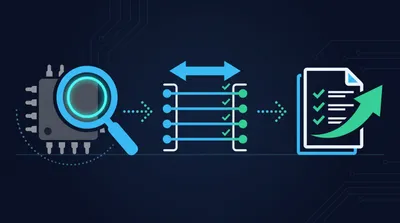
How to Verify Authentic Electronic Components Before You Buy
How to verify authentic electronic components: visual, electrical, X-ray and decapsulation inspection, plus certificate and traceability supply checks.
PinCompatible Engineering Team
Prefer English? We will keep this page context and only switch if you want.
Technical guides on pin-compatible substitutes, cross-referencing obsolete ICs, package and specification matching, and sourcing discontinued parts.
How to verify authentic electronic components: visual, electrical, X-ray and decapsulation inspection, plus certificate and traceability supply checks.
Linear voltage regulator selection guide: how to choose between linear, LDO, and switching regulators by matching voltage, current, dropout, and thermal.
LM2596 vs LM2576: compare the 3A buck converters by switching frequency, inductor size, efficiency, and when to choose each for your power supply.
LM358 vs LM324: compare the dual and quad op-amp families by supply range, bandwidth, quiescent current, and when to choose each in a circuit.
LM7805 vs LM317: compare the fixed 5-volt regulator and the adjustable regulator by output, current, dropout, and when to choose each for your design.
Logic IC equivalent guide: how to cross-reference 74-series logic parts by function number and match family, voltage, and speed for a safe substitute.
NE555 vs NE556: compare the single 555 timer and the dual 556 timer by package, pinout, supply, timing, and when to choose each for your circuit.
Obsolete electronic components FAQ for engineers: what obsolete and EOL mean, how to find replacements, source originals, and plan for end-of-life parts.
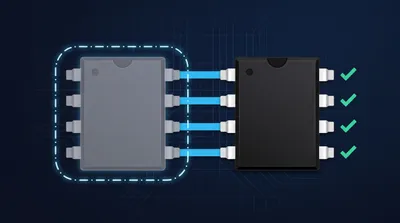
Obsolete IC replacement guide: how to source, substitute, or redesign around an obsolete IC, using cross-reference tools and verified sourcing.
Send your drawings, target quantity, and timeline. Our sales engineering team will respond within 24 business hours with a practical next step, a quote, or a sample plan.